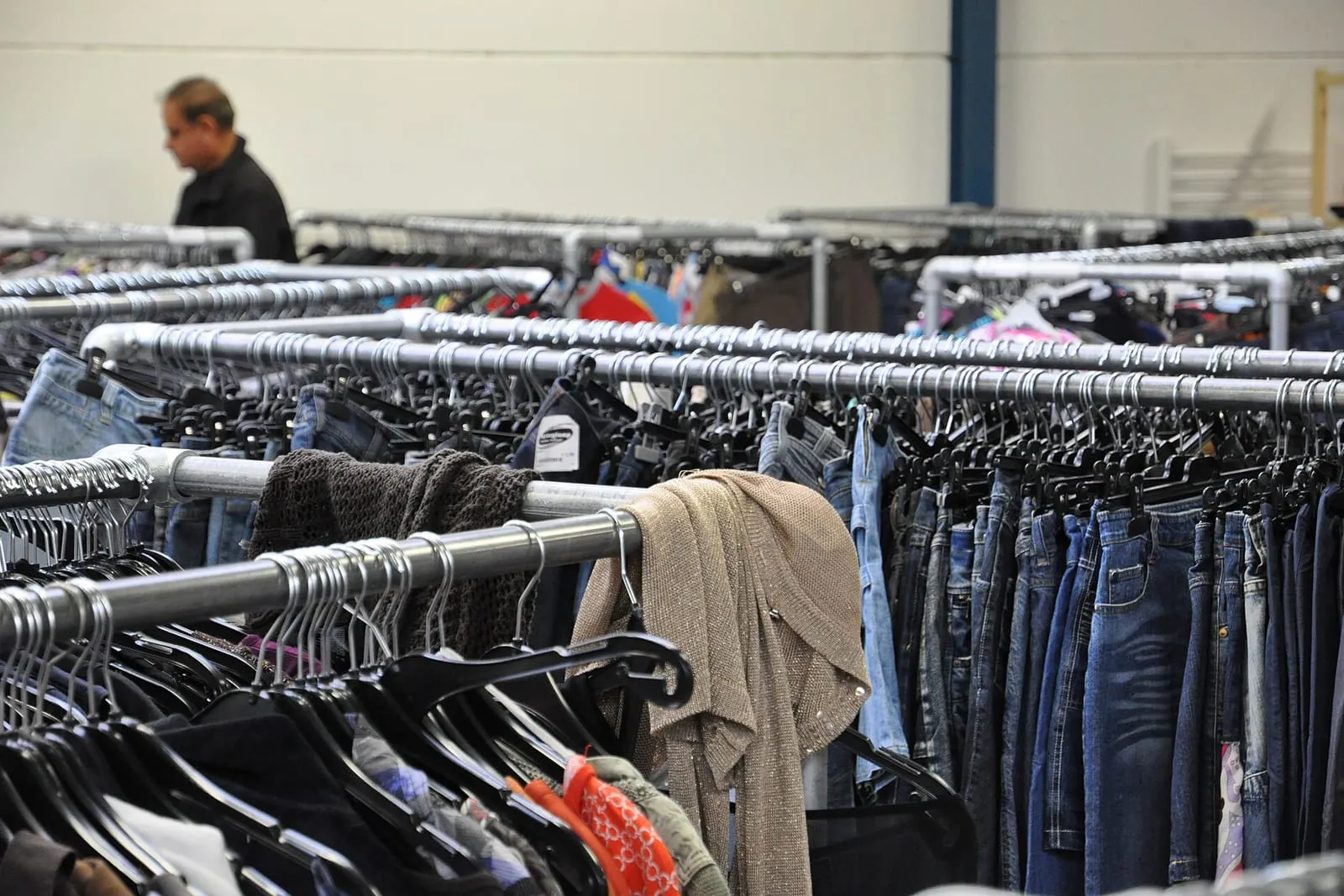
Condition is the difference between a garment you wear for years and a garment you throw away after two washes. It is also the part of buying secondhand that people skip, because flaws are easy to miss in a shop with warm light and a queue at the till.
None of this requires expertise. It requires five minutes, daylight, and a routine that looks at the same places every time.
The difference between damage and fatigue
Before the checklist, the distinction that matters most.
Isolated damage is a single flaw: a missing button, a small hole, a split seam. It happened in one place, it has not spread, and it can be repaired.
Fabric fatigue is structural. The cloth itself has lost strength across an area — thin underarms, a shiny seat on trousers, a collar worn through at the fold, knitwear that has gone limp. Fatigue is not repairable. You can patch over it, and the patch will outlast the fabric around it, which will fail next.
A garment with one isolated flaw is usually worth buying if the price reflects it. A garment with fatigue is a garment with a short life, no matter how good it looks on the hanger.
The five-minute inspection
Hold the garment up to a window or step outside. Point source light from above is what hides flaws; daylight through the cloth is what reveals them.
Turn it inside out and check the seams. Look along the shoulder seams, the armholes, the crotch of trousers and the side seams. Pull the fabric gently either side of the seam. Split stitches, stretched holes and previous repairs are all visible from the inside.
Check the underarms. This is where the first three failures usually appear: deodorant staining, thinning, and torn lining. Turn a sleeve inside out and look at the underarm panel in daylight. If the cloth has gone translucent and the weave is visible as a grid, the fibres there have broken down.
Check the cuffs, collar and hem. These receive the most abrasion. Cuff edges that have gone soft and furry, a collar worn through at the fold, a hem that has frayed from being dragged — all of these are fatigue, not isolated damage.
Check knitwear for holes and moths. Small holes appear along fold lines, at the neckline, at the cuffs and around the waistband, and moth damage is often in a cluster under the arm or down one side. Hold knits up to the light with the fabric slightly stretched: mending on a knit is often invisible in a shop and obvious in daylight.
Check everything that moves. Work the zip from bottom to top while the garment is flat and while it is on. Zip the buttons. Stretch the waistband. If a zip sticks, jams or skips teeth, budget for replacing it — often a bigger job than it looks on a lined garment.
Smell it. Smoke, heavy perfume and damp are recoverable in many cases. Mildew is not. Mildew smells like a cellar, and the spores are in the fibres; washing lessens it, wearing it in a warm room brings it back. Leave it.
Stains and what they mean
Stain removal is a whole subject, but for buying purposes the question is how the stain behaves rather than what made it.
- Protein stains — food, blood, sweat — set permanently if they have been through heat. A brown-edged stain that has been washed and dried is usually there for good.
- Grease and oil mark dark fabrics with a slightly darker patch, and often show up as a ring at the edge. These are sometimes removable, but dark, shiny patches in the same place are usually fibre damage underneath.
- Ink and dye transfer are hard to remove without risking the surrounding colour, especially on wool.
- Rust comes from metal fastenings and from wire hangers left in damp storage. It is very difficult to remove without damage.
- Deodorant and antiperspirant stains yellow the underarm fabric and often sit alongside fibre breakdown, so treat them as a durability warning rather than a cleaning problem.
The repair arithmetic
Decide whether the flaw is a repair you will do, a repair you will pay for, or a reason to walk away.
Worth doing yourself: missing buttons, a short split seam, a dropped hem, a small hole in a knit, replacing elastic in a simple waistband.
Worth paying for, on a good garment: replacing a zip, re-lining a jacket, re-hemming trousers to your length, re-stitching a pocket bag. These are real costs, and they should be weighed against the price of the garment and against how much life is left in the fabric.
Not worth it: anything on fatigued cloth, dry rot in silk or very old cotton, extensive moth damage, and leather or suede with cracking at the flex points. Leather cannot be mended invisibly, and cracked leather at the elbows and knees will keep cracking.
The last question is the one that saves the most money and the most space: if the repair were already done, would you still want this garment? If the honest answer is no, the flaw has made the decision for you. Put it back.
If you only do one thing
Look at the underarms, the cuffs and the soles of a pair of trousers. Those three places carry most of a garment’s history, and between them they show whether the cloth is merely worn or structurally finished. Two minutes with a sleeve turned inside out will tell you most of what an hour of general looking will not.