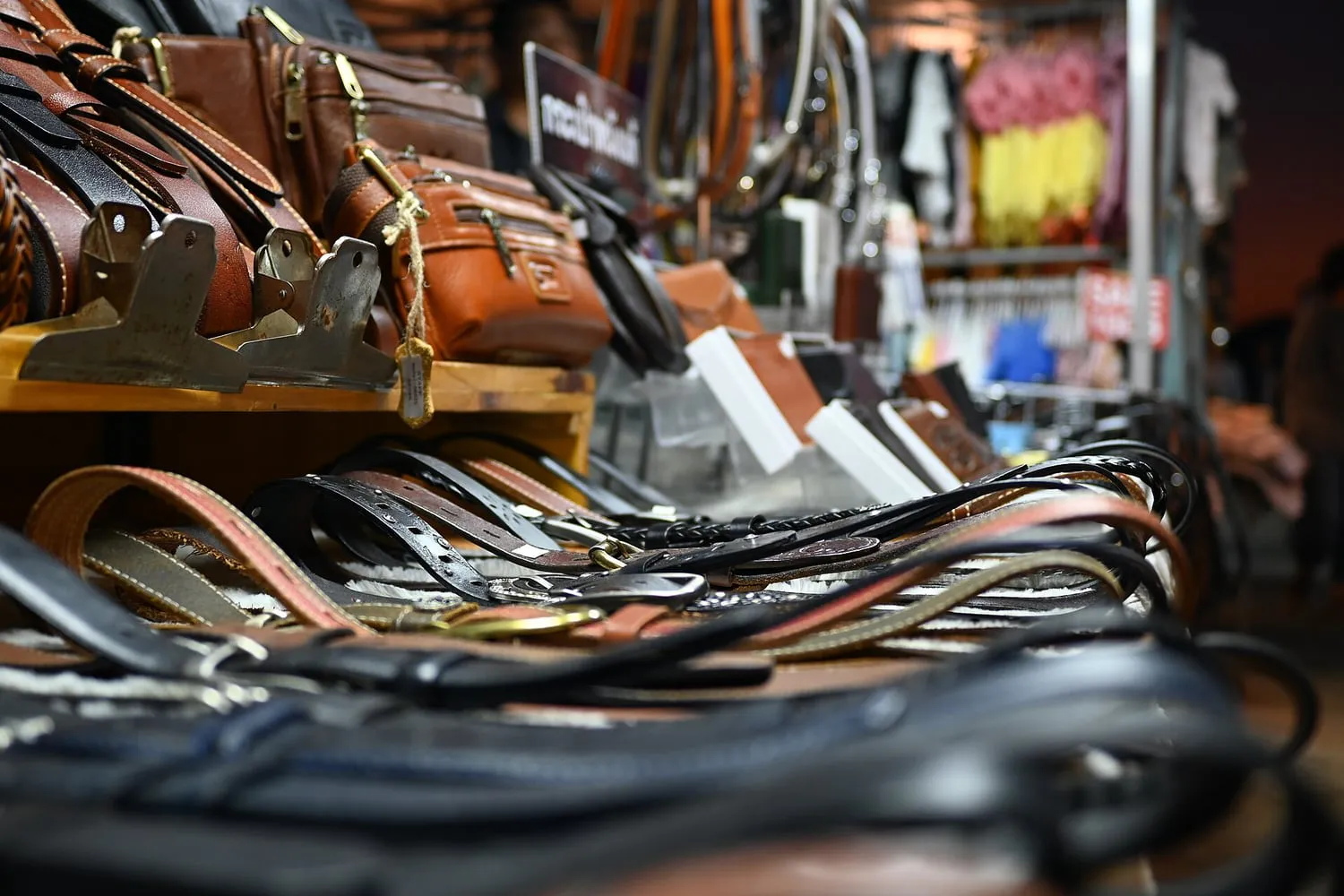
Leather is skin, and skin ages in ways you can read. Where a textile garment hides its history in the weave, a leather item wears its history on the surface, and that makes secondhand leather easier to judge than almost anything else you will find on a rack. The catch is that leather has two kinds of failure that look similar to an untrained eye: surface wear, which is cosmetic and often repairable, and structural failure, which is not.
Learning to tell them apart is most of what buying secondhand leather requires. The rest is knowing which parts are replaceable and which are not.
What leather does over time
Good leather develops creases where the material flexes, and those creases soften and darken with use. That is the desirable outcome. What you want to avoid is cracking, which is what happens when the natural oils in the hide have dried out and the fibres have begun to separate. Creases follow the direction of movement; cracks run across the grain, look like a network of fine lines, and feel brittle when you press them.
Look closely at where the item flexes. On a bag, that is the top of the handle and the fold where the flap opens. On a belt, it is the section that sits against the buckle and the part that curves round the waist. On shoes, it is the crease across the toe. If those areas are cracked rather than creased, the hide has lost its flexibility and no oil or cream will bring it back.
Edge finishing, stitching and hardware
A leather item is assembled from more than leather, and the other parts fail first.
- Edges. Look at how the cut edges have been treated. A painted edge, where a coating has been applied and polished, is neat but can chip or peel. A burnished edge, where the leather itself has been rubbed and sealed, wears better and can be restored with a little wax. A raw, untreated edge will fray and darken with handling.
- Stitching. Check that the thread is intact and that it is not sitting in a channel where the leather around it has torn. Thread rot is common on older pieces stored in damp conditions; it looks intact until you pull it. Stitch pull-through, where the holes have stretched and the thread has cut through the leather, is a structural problem.
- Hardware. Plated hardware wears to a different colour at the contact points, which is normal. Look for cracks at the base of a fitting, where a ring or a clip is attached. A solid metal fitting can be re-plated or replaced; a fitting that has torn out of the leather leaves a hole you cannot easily rebuild.
The problem with shoes
Shoes are the hardest category, because a shoe records the foot that wore it. The insole moulds to the shape of the previous owner, and a deep, glossy impression in a leather insole means the shoe has taken on that foot and will not easily take on yours. A removable insole is a different matter: replace it and the shoe is neutral again. A thin leather insole with a light impression can sometimes be softened with a little conditioner and worn in.
Then decide whether the shoe can be resoled. A welted shoe, where the sole is stitched to a strip of leather running round the edge, can be resoled repeatedly and is the best case. A cemented shoe, where the sole is glued directly to the upper, can be resoled but the process stresses the upper and may not survive more than one round. Ask how the sole is attached, or look for the visible stitch line round the edge that indicates a welt.
Interior condition matters as much as the outside. Peer inside the heel and check that the lining is intact where your heel rubs. Check the footbed for a soft spot, which suggests the supporting material inside has collapsed. Check the toe for a bulge that indicates a previous repair or a damaged stiffener. None of this is visible from the outside, which is why shoes deserve more scrutiny than bags.
Belts are the easiest repair
A belt is a single strip with a buckle, which makes it the most forgiving leather item you can buy secondhand. If it is too long, holes can be punched and the strap trimmed and re-finished at the tip. If it is too short, a new hole can sometimes be added behind the last one, or the buckle can be moved to a fresh position. If the buckle is damaged or the plating is worn, a cobbler or a leatherworker can swap it for another with the same bar width, and the rest of the belt carries on.
The one thing to check is the leather at the buckle end, where the strap folds back on itself. This is the highest-stress point on any belt, and if the hide has cracked through there, the repair becomes a rebuild.
Bags: what breaks first
On a bag, the handles and the strap attachments carry the weight, so they fail first. Look at where the handle joins the body. A handle that is stitched straight onto the panel will eventually tear the panel; a handle attached with a reinforcing patch or a metal ring spreads the load and lasts longer.
Inside, the lining is usually the first casualty, because it is often a lighter material than the shell and gets abraded by whatever the bag carries. A torn lining can be replaced by a leatherworker, but it is a fiddly job and worth pricing before you commit. The zip is the next common failure; a zip in a leather bag can be replaced, but the work is skilled and the result depends on how the zip was originally set into the leather.
Repair it or walk away
Broadly, these are worth fixing: surface scuffs on dyed leather, worn edges, loose or broken hardware, a worn belt, a torn lining, and soles on a welted shoe. These are usually not: cracks across the flex points, leather that has torn out around a fitting, mould that has penetrated the hide and left staining, and any shoe whose insole has been moulded deeply by a foot very different from yours.
Conditioner and cream maintain leather; they do not resurrect it. Treating a dry, cracked item with oil will make it look better for a week and then return to the same state, because the damage is in the fibre structure rather than on the surface. Keep leather away from direct heat and prolonged soaking, and let it dry slowly at room temperature when it gets wet.
The buying rule is simple. Pay for items whose structure is sound and whose surface is tired, because surface can be improved. Refuse items whose surface looks fine but whose structure is failing, because that is the expensive end of the trade.