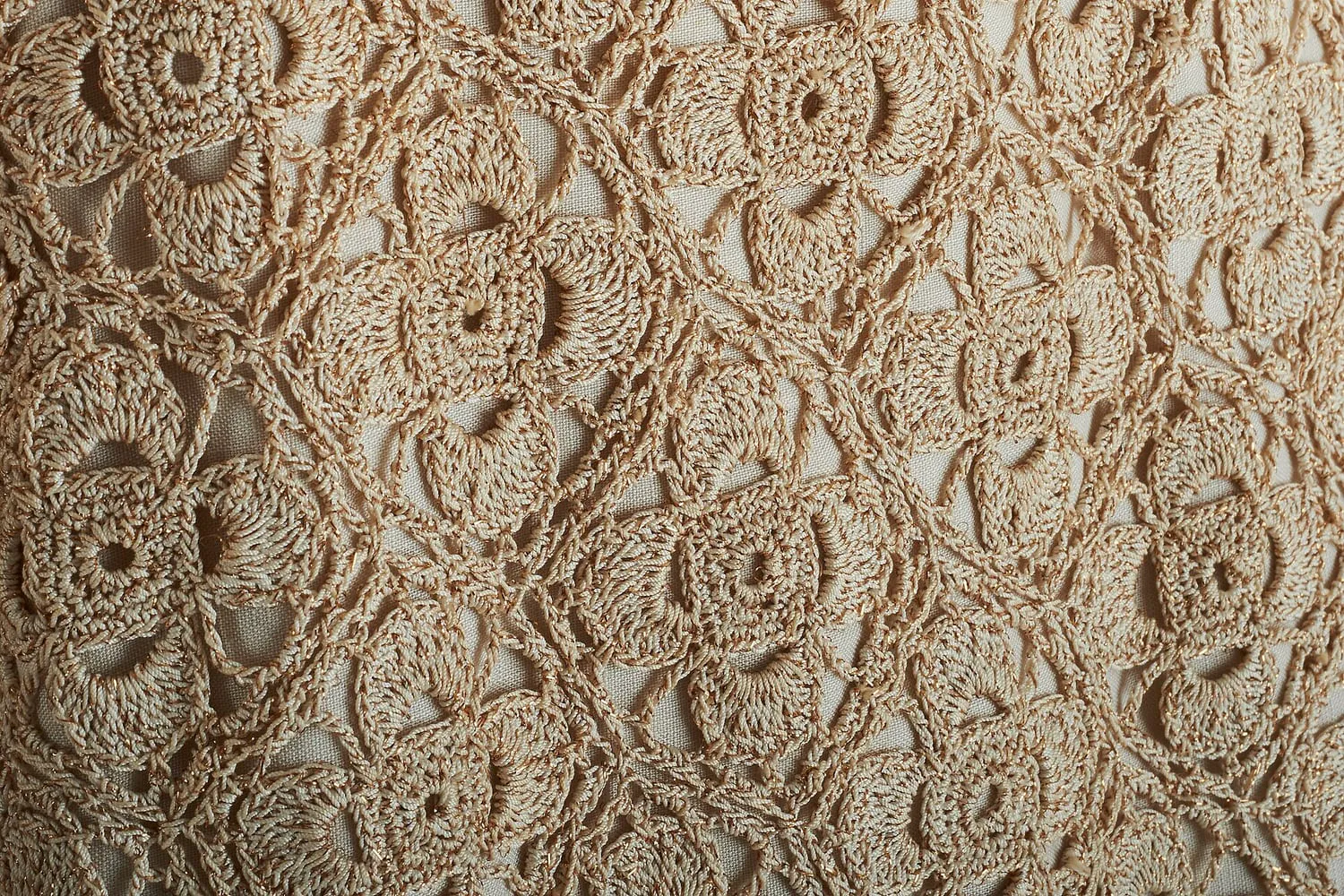
Washing a vintage garment is a decision made in two stages. The first is the fibre, because wool, silk, rayon, linen and the older synthetics each tolerate a different combination of water temperature, agitation and chemistry. The second is the construction, because a garment can be made of a fibre that would survive a bath while its lining, interfacing or trim would not.
Most of what follows is about the first stage. But the second stage is where the expensive mistakes happen, so it is worth reading before you fill a basin.
Fibre by fibre
Wool
Wool is protein, and it does two unfortunate things in the wrong conditions. Heat and agitation make the scales on the fibre lock together and the fabric felts, shrinking permanently. Alkaline detergent and enzymes attack the fibre itself, because the proteases in biological detergent cannot tell wool from a stain.
Wash wool in cool water with a pH-neutral or slightly acidic wool detergent, move it as little as possible, and never wring it. Soak briefly, press the water through with your palms, and rinse in water of the same temperature. A change of temperature mid-wash is what causes wool to shrink unevenly.
Silk
Silk is also a protein fibre, and it dislikes alkali. Ordinary laundry detergent is alkaline, so use something mild and pH-neutral. Cool water, gentle handling, and no bleach. Older silk sometimes carries a weighting, a metallic finish applied to give body, which can make the fibre brittle and prone to splitting; there is no way to reverse that, and the safest treatment for weighted silk is to avoid washing it at all.
Rayon and viscose
Viscose, the older name for the same family of regenerated cellulose fibres, is notably weaker when wet. It loses a large part of its strength in water, so a garment that feels robust dry can tear if you lift it by one corner while soaked. Support it with both hands, lay it flat rather than hanging it, and do not wring. Some viscose also shrinks and bleeds, so expect the garment to change.
Linen
Linen is the easiest of the natural fibres to wash. It tolerates warm water, a mild detergent and moderate agitation. Its weakness is not water but repeated folding: linen cracks along a fold line that has been pressed into the same place for years, so handle old linen by its flat areas and iron it while still damp and slightly warm to smooth the creases.
Older synthetics
Nylon, polyester and acrylic from the middle of the last century are generally stable in water, but each has a specific weakness. Polyester and nylon are heat-sensitive and can melt under a hot iron. Acrylic stretches when wet and can lose its shape permanently if hung, so dry it flat. Older synthetics are also prone to pilling and static, which washing will not fix.
Metallics and threads that tarnish
Fabrics with metallic yarn, often called lamé or by the trade name for the thread, do not take kindly to soaking. The metal coating tarnishes, and the fine yarn can break away from the base cloth. Spot-clean rather than immerse, and keep oxygen bleach away, since it will oxidise the metal.
How to hand wash in practice
Fill a basin with cool water and dissolve the detergent completely before the garment goes in; undissolved granules sit on the cloth and leave localised damage. Put the garment in, press it down until it is submerged, and leave it for a few minutes rather than scrubbing.
Move the water through the fabric by compressing it gently with your hands, not by rubbing. Rubbing abrades the surface, raises the nap and can felt wool. Rinse in water of the same temperature as the wash, several times if needed, until the water runs clear.
Remove excess water by pressing the garment against the side of the basin, never by twisting. Then lay it on a clean towel, roll the towel up with the garment inside, and press to blot the remaining water. The rolled towel supports the weight so the wet fabric does not stretch under itself.
Test for colour bleed before any of this. Press a damp white cloth against an inside seam or a hem facing, and see whether the cloth picks up colour. If it does, either wash the garment alone, accept that the colour will lighten, or do not wash it.
Drying and reshaping
Dry flat, in shade, away from direct heat. Hanging a wet knit or a wet viscose garment lets gravity pull it out of shape, and heat from a radiator or a tumble dryer does the same thing more quickly.
Reshape while it is damp. Smooth the seams, ease the hem straight, and press the garment gently into the silhouette it had when it fitted. For wool, this reshaping is part of the wash; the fibre will hold the shape you give it as it dries. For structured pieces, you may need to support the shoulders with a shaped hanger and let the rest dry flat.
Garments that should not get wet
Some constructions rule out immersion, whatever the fibre.
- Structured tailoring with fused interfacing. The glue holding the stiffening to the outer fabric can release in water, leaving bubbles that pressing will not remove.
- Garments with glued-in shoulder pads or foam. The foam collapses and the shape is lost.
- Beaded, sequinned and embroidered pieces. The thread and the ground fabric can behave differently in water, and hand-sewn beads loosen.
- Garments with metal trims, buckles or heavy zips. These rust and stain the surrounding fabric.
- Any leather or suede trim, or garments with a leather label. Leather stiffens and can discolour fabric as it dries.
- Very old silk that has rotted along the folds. Wetting it accelerates the breakdown, and it may simply fall apart.
The risks of dry cleaning
Dry cleaning is not a guaranteed safe option. The solvent strips natural oils from wool and silk, leaving them drier and more brittle, and it can shrink some garments and disturb trims and finishes. Some beads and coatings dissolve, and some dyes are affected. The process also cannot fix a stain that is chemically set, so it is not a magic reset button for a marked garment.
Before you hand over an important piece, ask what process will be used and whether the operator has experience with the garment’s age and fibre. If the answer is vague, a careful hand wash in cool water is often the lower-risk choice for anything that can safely get wet at all. When in doubt, do less: airing, brushing and spot treatment solve more vintage problems than a full immersion ever will.