Undertone first, depth second, and test the stripe in daylight on your jaw and chest, never your hand. A foundation that matches your wrist but not your chest looks wrong the second you walk outside, which is usually where you first notice.
The reason shops are difficult is lighting, not staff. A counter is built to flatter: warm bulbs, ring mirrors and a shelf layout that makes every shade look plausible. The smart move is to treat the first match as a hypothesis and the daylight at the door as the test, and to ask for a sample you can carry away.
What store lighting hides
Lighting, and the error it produces
| Light | What it does to a shade | What it hides |
|---|---|---|
| Warm tungsten bulbs | Skews everything yellow and orange | A cool-toned match looks gray outdoors |
| Cool fluorescent tubes | Skews green and gray | Warm shades look ruddy the moment you leave |
| Bright shelf LEDs | Washes out contrast | Everything matches at the counter, nothing at the door |
| Ring-lit counter mirrors | Flatters depth and coverage | Oxidation, dry patches and texture |
| Daylight through glass | Neutral, but changes across the day | Late afternoon light leans warmer than midday |
Daylight is the reference because that's where people actually see you. A north-facing window at midday is the fairest test. If evening is your only chance to get outside, expect a warm bias and check again on a weekend morning before buying a full bottle.

Undertone first, depth second
Undertone is the way your skin leans: cool, warm, neutral or olive, and it stays put. Depth is how light or dark you are, and for a lot of people it moves with the seasons. Pick depth first and you can end up with the right lightness and the wrong cast, which is the match that looks fine indoors and odd at the bus stop.
- Cool — Pink or blue leaning, jewelry in silver suits better, and warm foundations pull orange within the hour. Look for pink or neutral-warm descriptions.
- Warm — Peach or golden leaning, gold jewelry suits better, and cool foundations pull gray and flat. Look for golden or yellow descriptions.
- Neutral — Neither dominates and most sales-floor matches will be close. The common error is a neutral buying warm, which shows up as a slight tan line at the jaw.
- Olive — A green cast that is neither pink nor golden. Plenty of ranges still underserve it, so olive skin should stripe three shades and be ready to mix two.
The vein test is a rough guide, not a diagnosis: greenish veins usually mean warm, blue usually cool, a mix usually neutral. It falls apart on olive and very deep skin, where a daylight swatch beats any rule. Ask for samples; many counters will make one up, and it beats a wrong full-size bottle.
Testing a shade properly
- 1
Bring your own mirror and go outside
Walk the stripe to a door or window. Two minutes in daylight tells you more than twenty under a bulb.
- 2
Stripe three candidates, never one
Three stripes side by side on the jaw, blended at the bottom edge. Any single shade on its own looks like a match.
- 3
Check the chest too
A foundation matched to the jaw but not the chest creates a visible line at the neck. Match the neck and chest, and blend the jaw.
- 4
Walk for fifteen minutes
Oxidation shows up in that window, and it's the top reason a shade looks perfect in the store and orange at home.
- 5
Take a sample, do not buy the bottle
Two or three sample pots worn across a work week settle it better than any counter match.
The six foundations worth sampling
Test these in daylight before you buy
Shade ranges are described by how wide they actually run, and finishes by how they look at hour four, not minute one. Prices are shown only where we confirmed them on the brand or retailer page in Oct 2026.
Best rangeNARS
Light Reflecting Foundation
A natural finish that suits normal and dry skin. Oily skin may want a primer or powder by midday. Swatch at least three depths on the jaw; don't trust the counter's first pick.
Shop the foundation
Estée Lauder
Double Wear Stay-in-Place
Reliable matte coverage on combination and oily skin, and it genuinely holds. The catch is that it sets fast, so blend one cheek at a time or it will patch.
Shop the foundation
Fenty Beauty
Pro Filt'r Soft Matte
Fenty's own site now leads with the newer Pro Filt'r Fluid Flex formula, listed in 50 shades at $48 (fentybeauty.com, Oct 2026), so check whether Soft Matte is still stocked before you go looking. Either way, a range that deep matters if you sit between two standard depths.
Shop the foundation
Maybelline
Fit Me Matte + Poreless
Maybelline lists this in 40 shades and claims up to 12 hours of shine control, which makes it the cheapest way to test a depth before you commit to a premium bottle. Sometimes the match is close enough to keep.
Shop the foundation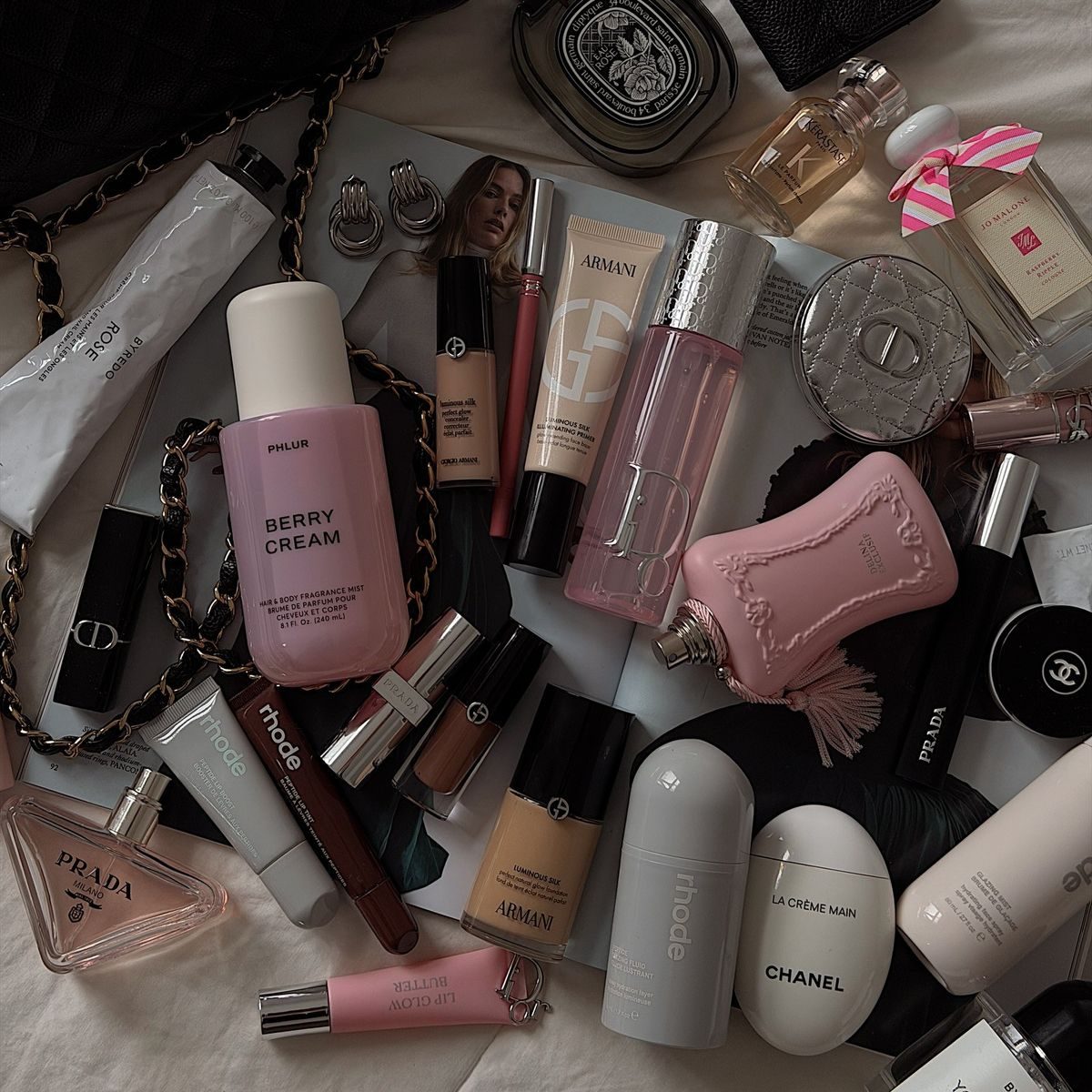
Armani Beauty
Luminous Silk Foundation
A forgiving, skin-like finish that flatters dry and mature skin. It is sheer enough that an imperfect match is less obvious, which is also why it is not the choice for full coverage.
Shop the foundationGlossier
Perfecting Skin Tint
Sheer enough to be forgiving on shade, which is its virtue and its limit. Glossier lists it at $30 (glossier.com, Oct 2026). If you need coverage, look elsewhere; if you want a daytime tint, the match is easy.
Shop the tintMistakes the counter encourages
- Swatching the back of the hand — Your hand is a different depth from your face and rarely oxidizes the same way. Your jaw or neck is the only swatch spot that tells you anything.
- Buying the full bottle after one match — A match under warm bulbs is a guess. Ask for samples, two or three of them, not just the one the salesperson likes.
- Matching on top of existing makeup — Foundation over foundation reads darker and never blends. Arrive with bare skin, or ask to remove the stripe area first.
- Being sold a setting powder at the same time — Powder changes the finish and the apparent shade. Settle the foundation first, in daylight, over a week, before adding anything on top.
Hold on to this one: a foundation half a shade off can be rescued with a sheerer finish or a warmer powder. One that's a full depth off can't. Get the depth right and treat the finish as the part you can negotiate.