Leather bags are the best value in secondhand fashion under $50, because the brands that made them properly are unfashionable and the leather has already proved it can survive twenty years. A 1990s glove-tanned Coach shoulder bag at around $38 used can outlive a much pricier coated-canvas bag bought this week, and it will still be worth $110 when the other one is worth nothing.
The purchase prices below are all under $50. The retail figures exist to show what each bag replaces, because the gap between a $38 bag and a $398 bag is the entire argument for buying leather secondhand rather than settling for a cheap new one.
Leather grades, sorted by what survives
Six words get used interchangeably on bag labels and they describe six entirely different materials. Learn the order and you can grade a bag in the time it takes to read the tag, which matters because the label on a cheap bag will use the most flattering word available.
Leather grades, and how each one ages
| Grade | What it actually is | How it ages | Under $50 verdict |
|---|---|---|---|
| Full-grain | Whole hide, surface left intact | Darkens and creases well | Buy. Coach, Dooney and Ettinger used it |
| Top-grain | Surface sanded lightly to remove flaws | Good, slightly less patina | Buy at $38 or less |
| Corrected grain | Sanded and coated with a pigment layer | The coating cracks where the bag flexes | Buy at $25 only |
| Split grain | Inner layer, often embossed | Weak at the strap anchors | Skip |
| Bonded leather | Shredded fiber glued to a backing | Delaminates within one to three years | Skip |
| PU, vinyl or vegan leather | Plastic on a textile backing | Flakes off in sheets | Skip, whatever the label claims |
The word to distrust is genuine leather, which is a legal term rather than a quality one and most often means bonded or a heavily corrected split. The words to trust are full-grain, glove-tanned and vegetable-tanned, because all three describe a process that leaves the hide structurally intact.
Six hardware checks that take two minutes
Hardware is where a cheap bag announces itself and where an expensive one fails first, because a strap anchor carries more load than any other point on the object. Work through these in order at the rack.
- Open the bag and flex the strap anchors with your thumb. They should be leather folded over and stitched through, not a single line of stitching holding a metal ring to a thin tab.
- Check the metal for plating loss at the points where it rubs. Solid brass goes dull and then polishes back; plated zinc shows a gray or green core and cannot be restored.
- Run every zipper the full length. Look for a maker stamp on the pull, which on older bags means YKK, Talon, riri or Lampo, all of which are replaceable by a leather worker.
- Press the corners on the base. Wear through the leather at the corner is repairable with a patch; wear that has exposed the lining means the bag has been dragged rather than carried.
- Look at the lining for mildew, which shows as gray speckling and smells of a cellar. Linings cannot be replaced without dismantling the bag.
- Check the edge paint along the strap. Flaking edge paint is cosmetic and a cheap fix; a strap that has separated from its stitching is a real repair and changes the math.
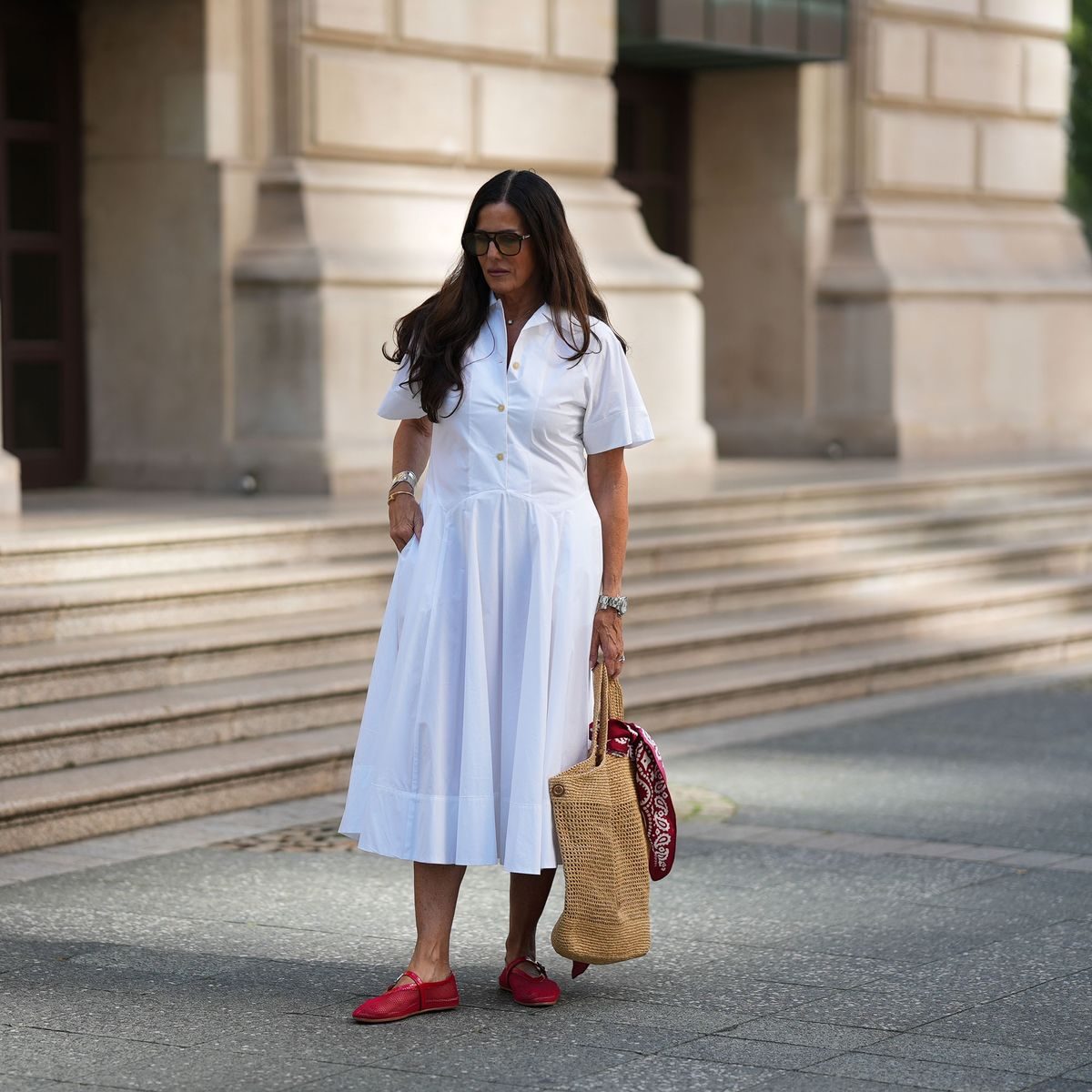
The shapes that date fastest
Shape decides resale value more than leather quality does, because a full-grain bag in a silhouette from 2013 still looks like 2013. These five read as dated the moment they leave the wardrobe, and all five are common on secondhand racks for exactly that reason. Two names do the heavy lifting: Coach, the New York leather-goods house, and Dooney & Bourke, founded in 1975 in Norwalk, Connecticut, as a maker of belts, suspenders and ties before handbags.
- Logo monogram canvas — The pattern dates a bag to a decade instantly, and sellers price it as though nothing has changed. Buy it only if you want the pattern for its own sake, and never above $40.
- Structured trapeze with a top handle — The office bag of the 2010s. It photographs well and looks like a uniform in person, and the resale market has been falling for years.
- Mini baguette with a short shoulder strap — Cyclical rather than dead, which means it is out now and someone will want it again in six years. Not a shape to spend the ceiling on.
- Oversized shopper with a large logo plate — The mall decade in one object. The plate is usually plated rather than solid, and once it dulls the bag has no resale value at all.
- Quilted bag with plated chain — The chain is the problem. Plating wears at the shoulder contact point within a year, and re-plating a chain costs more than the bag is worth.
The shapes that hold are the ones with no era attached: a plain flap with a single turn lock, a saddle or hobo with one strap, a satchel with a folded top, a bucket in plain leather, and a simple nylon tote. All five look the same in any decade, which is the whole reason they keep their value.

Six bags worth hunting under $50
The under-$50 bag edit
Where a repair is likely, the cost sits in the note so the total is visible before you commit rather than after. Prices are shown only where we confirmed them on the brand or retailer page in Oct 2026.
Best hold valueCoach
Glove-tanned leather shoulder bag, 1990s
Ask for a photograph of the interior creed patch for the style number and of both strap anchors, which are the first thing to fail.
Search listingsBest leatherDooney & Bourke
All-weather leather satchel
The all-weather leather era used a dense bridle leather and solid brass, and it is the reason these satchels are still in circulation. Check the base corners and both strap anchors for stitching failure, and press the leather at the flap fold, which is where it dries out and cracks first.
Search listings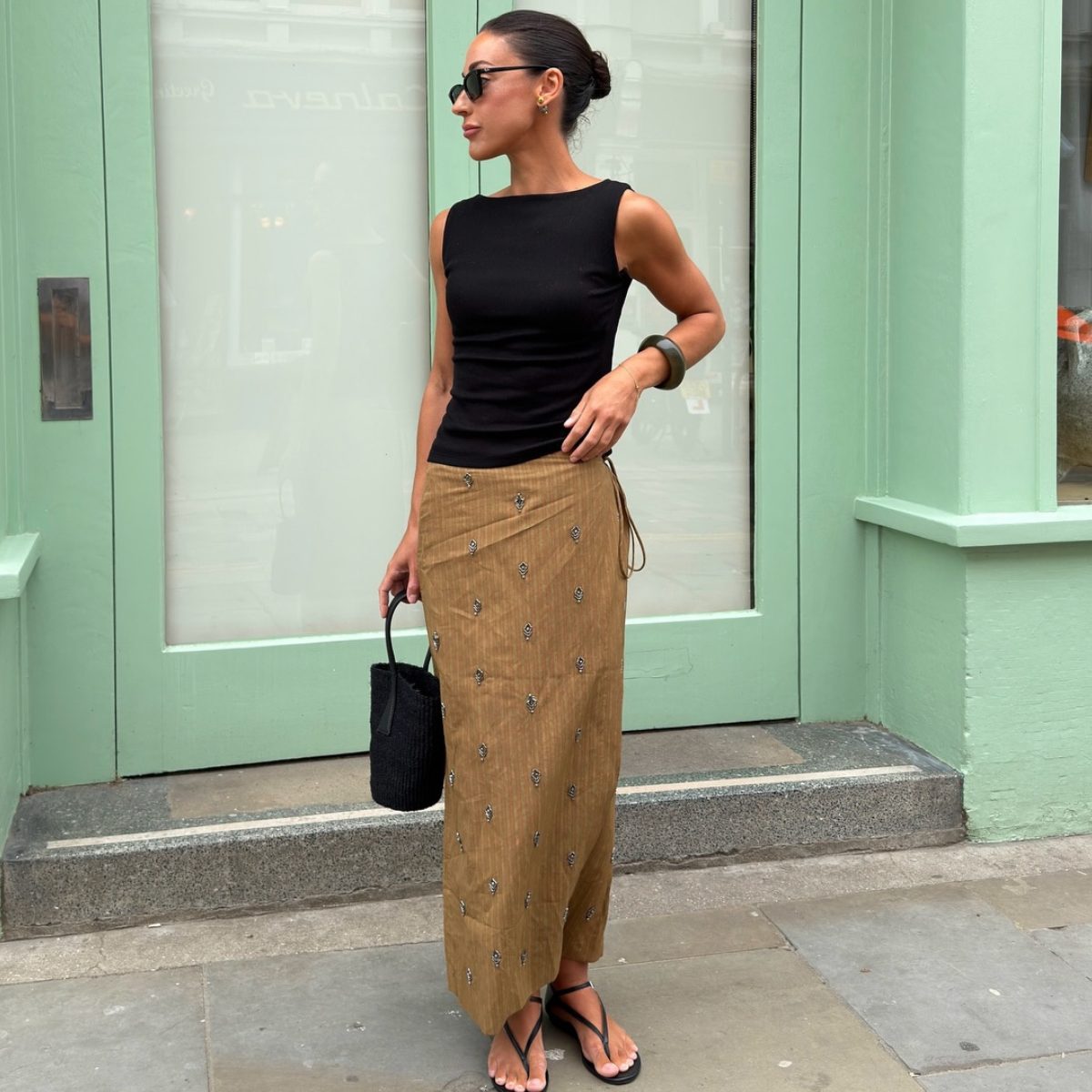
Longchamp
Le Pliage nylon tote, large
The one nylon bag worth buying secondhand, because it survives being carried daily for a decade and folds flat when you are not using it. Check the four base corners, which wear through first, and the leather flap for cracking.
Search listings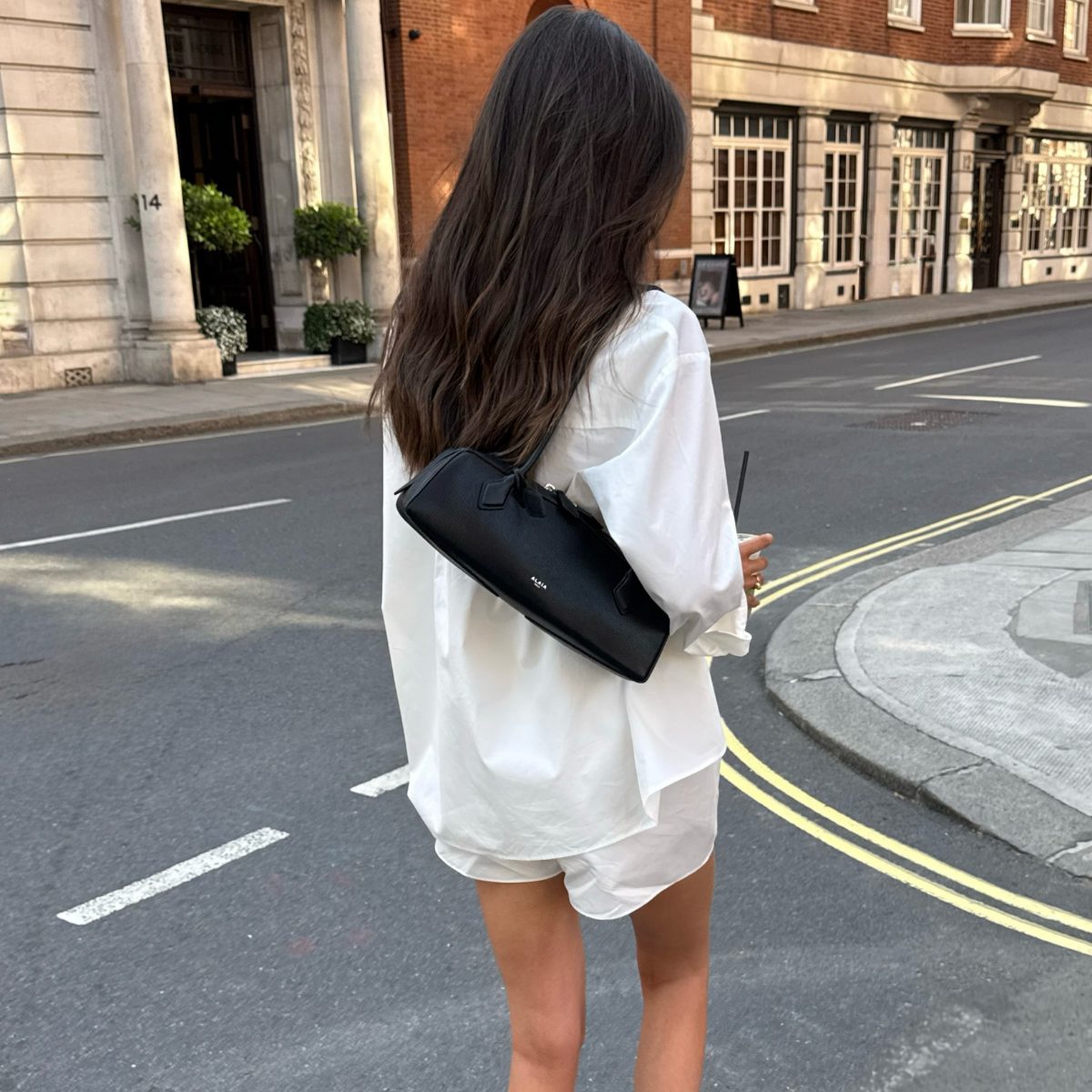
Tumi
Ballistic nylon briefcase
Check the zipper pulls and the shoulder pad, and confirm the laptop sleeve is intact rather than cut out.
Search listings
Bally
Leather shoulder bag, worn corners
Older Bally leather is genuinely good and the brand carries no resale premium, which is the combination to shop for. Buy it if you like the wear rather than tolerating it.
Search listingsUnbranded Italian
Leather bucket bag
The best value in thrift stores, because an unbranded Italian bag cannot be priced by name. Look for a firm hand, an even color with darker edges, and no coating that flakes when you scratch it with a fingernail.
Search listingsRepair or replace?
The repair math on secondhand bags (estimates)
| Bag | Typical used (est.) | Repair needed | Costs new (est.) | Verdict |
|---|---|---|---|---|
| Coach glove-tanned shoulder bag | $38 | Conditioner, $10 | $398 | Buy. Nothing structural to fix |
| Dooney all-weather satchel | $35 | None if the stitching is intact | $340 | Buy |
| Bally shoulder bag, worn corners | $45 | Edge paint and a corner patch, $25 | $1,150 | Buy if you like the wear |
| Longchamp Le Pliage, worn corners | $40 | Corner reinforcement, $15 | $155 | Buy |
| Bag with a single-stitch strap anchor | $20 | Restitching both anchors, $35 | $120 | Skip. The repair costs more than the bag |
The rule is the same one that applies to shoes: pay for the repair when the finished object costs materially less than the replacement, and never when the structure has failed. Corner wear and edge paint are cosmetic. A separated strap anchor on a single line of stitching is structural, and on a cheap bag it is not worth fixing.
The ladder: $12, $25, $40, $50
What each bag budget buys
| Budget | What it buys | What it will not buy |
|---|---|---|
| $12 | A nylon crossbody, a leather clutch with a scuffed corner | Anything glove-tanned in clean condition |
| $25 | A corrected-grain shoulder bag, a Kipling nylon tote | Full-grain leather without a flaw |
| $40 | A 1990s Coach flap bag, a large Le Pliage tote | Mulberry, Ghurka or a Bally in good condition |
| $50 | Tumi ballistic nylon, a Dooney satchel, a vintage Coach in a rare color | Designer leather with solid brass at normal asking prices |
The band worth aiming at is $35 to $40, which is where full-grain leather from a defunct or unfashionable label sits. Below that you are buying nylon, corrected grain or someone else's repair problem. Above it you are competing with people who read the same blog posts you do.