Runway fashion reaches the secondhand rack in one of two ways. Sometimes the exact idea arrives as a reissue of something old, which makes it cheap and easy to find. More often only the silhouette arrives, and the rest is up to you. Of the four ideas that ran through the fall shows, three are already sitting on racks at a fraction of retail, and one isn't worth chasing.
Translation is a skill with rules. You are not looking for the garment in the photograph; you are looking for the one property that makes the photograph read the way it does, a shoulder line, a depth of color, a weight of leather, and then finding that property in something already made.
Idea one: rounded volume
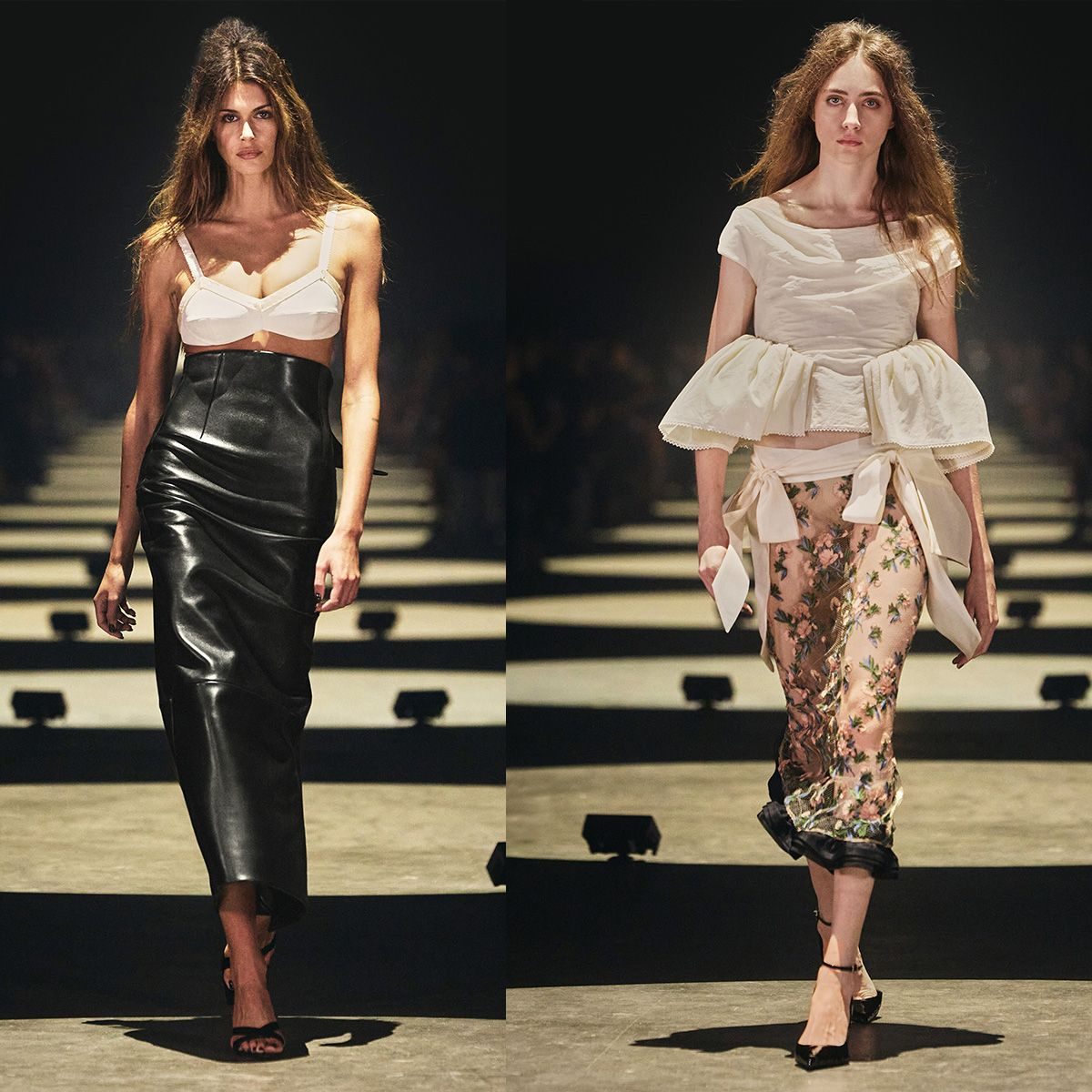
The shows went soft and round at the shoulder, with dropped armholes and cocoon backs. It is a spectacular silhouette and a hard one to fake, because volume only works when the cloth is heavy enough to hang rather than cling. Anything thin or stretchy collapses into a shape that reads as a size too big.
On the rack this means one thing: check the shoulders of every 1980s wool coat you pass. That era produced this line in dense melton and tweed, and resale still files it under frumpy. A rounded-shoulder overcoat in good wool is often a $60–120 buy used (est.).
Idea two: deep saturated color
Autumn color this season was dark and rich: oxblood, forest, chocolate and ink. Depth is what separates a runway color from a fast-fashion one, and depth is exactly what fades. Be most careful here secondhand, because a faded oxblood coat is just a brown coat with an identity crisis.
Check saturation at the seams, not the middle of the panel. Fading works from the outside in, so seam allowances, the inside of the cuffs and the underside of the collar show the original color. If the difference is more than a shade, the garment has lost the thing you were buying.
Idea three: structured leather
Every season somebody puts a stiff leather coat on a runway and every season the secondhand market fills with soft, slouchy leather that will not do the job. Stiffness is the entire point: the garment has to stand away from the body. If it drapes like a cardigan, it is not this idea.
Calfskin and buffalo hold shape; lambskin doesn't, and neither does much of what's sold as leather at a mall price. Secondhand, a structured calfskin coat often runs $120–260 (est.). Bend the sleeve at the elbow: deeply creased leather has already relaxed past what this look needs.
You are not shopping for a trend. You are shopping for the physical property that makes the trend work.
Idea four: deliberate imperfection
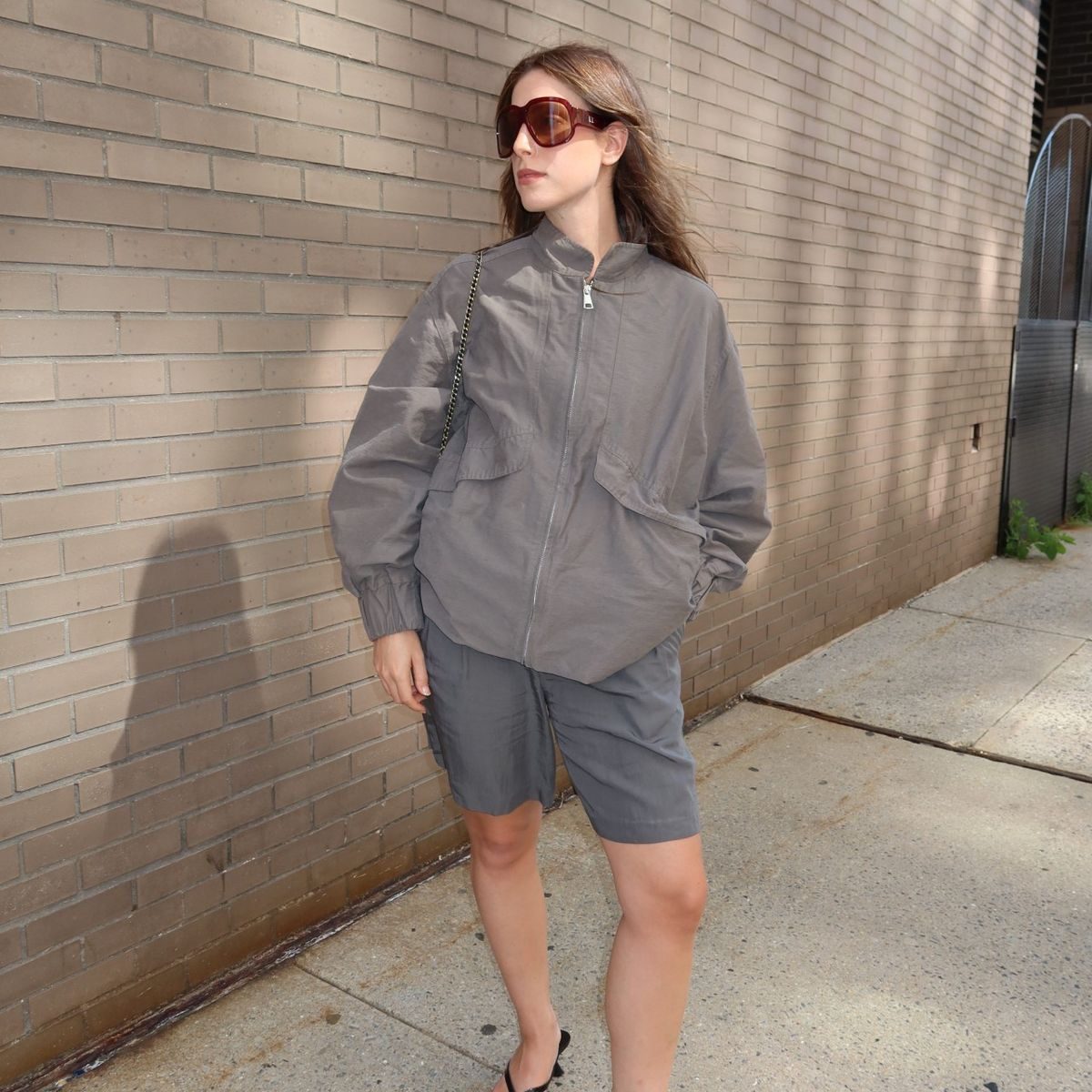
The fourth idea, visible mending and raw edges, is the easiest to get right and the easiest to get wrong. Done well it means a garment with a visible history: a darned elbow, a re-stitched hem, a patch somebody added because they cared. Done badly it means a cheap garment falling apart in the changing room.
The test is whether the repair is deliberate or accidental. A darn in a contrasting thread, worked neatly and finished off, is the idea. A tear held together with fusible tape is damage, and it will fail in the wash. Secondhand, genuinely mended pieces are cheap because sellers price them as damaged stock, which is the cheapest route into one of the season's better ideas.
Where each idea lives, and what it costs
Runway ideas, priced (estimates)
| Runway idea | Where to look | New (est.) | Secondhand (est.) | Pay up to (est.) |
|---|---|---|---|---|
| Rounded volume | 1980s wool coats | $500–1,200 | $60–120 | $140 |
| Deep color | Wool, silk, leather | $300–700 | $40–90 | $110 |
| Structured leather | Calfskin and buffalo | $900–2,000 | $120–260 | $280 |
| Visible mending | Anything with a good darn | $200–600 | $15–45 | $50 |
Six finds that carry the season
The translation edit
One find for each idea, plus two that carry several at once. Prices are shown only where we confirmed them on the brand or retailer page in Oct 2026.
Carries two ideasUnbranded, 1980s
Rounded-shoulder melton overcoat
Volume plus deep color in a single purchase, which is why this is the best value in the article. Check that the shoulder line still sits away from the body rather than collapsing inwards.
Search listingsBest structureVintage leather, any maker
Calfskin car coat, structured
Stiff leather that stands away from the body is the whole idea, and old calfskin is stiffer than anything new at this price. Creased, relaxed leather has already lost the shape you want.
Search listings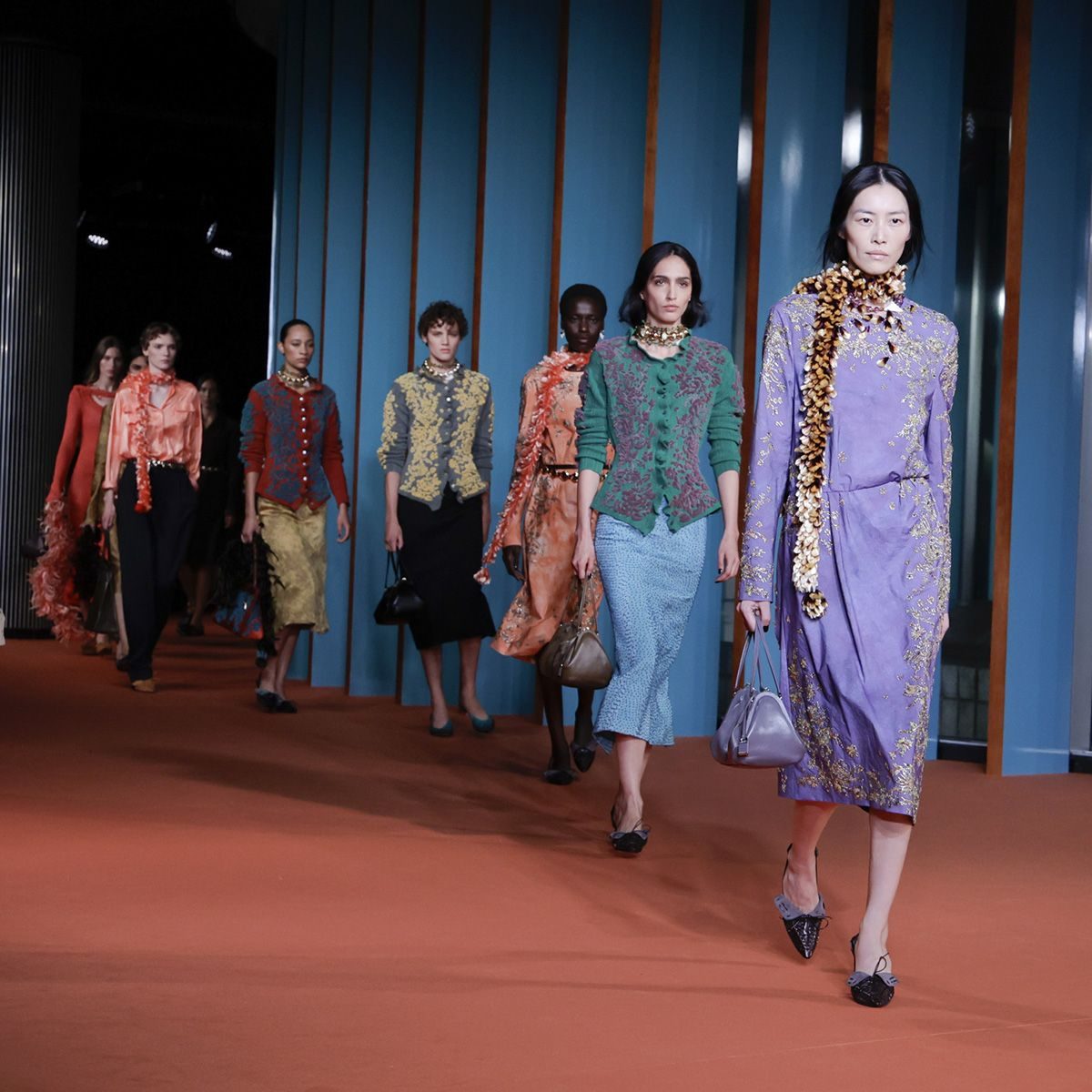
Any maker
Oxblood wool blazer
A neutral-shaped blazer in the season's color, which is the cheapest way to look current without looking seasonal. Fade at the shoulders is common; the seam allowances tell you the truth.
Search listings Cheapest idea
Visible mending
Darned lambswool cardigan
Sellers price mended knitwear as damaged, so a neat contrasting darn is a discount rather than a flaw. Anything held together with fusible tape is damage and will fail in the wash.
Search listings
Vintage, 1960s–90s
Deep forest green wool skirt
A saturated midi in a deep autumn green does more work than three printed pieces. Lining matters here: an unlined wool skirt will cling to tights all winter.
Search listingsAny maker
Ink blue silk scarf, large square
The cheapest way to add both deep color and volume to an outfit you already own. Hand-rolled edges are the sign of a properly finished scarf; machine-hemmed ones should cost half.
Search listingsTranslating a look in a real shop
- 1
Name the property, not the garment
Say out loud what makes the look work: rounded shoulder, dense cloth, deep color, stiff leather. Then shop only for that property. This single habit is the whole skill.
- 2
Check the one physical detail that cannot be faked
Weight, stiffness, saturation or stitch quality. Every runway idea depends on one trait that cheap versions cannot reproduce, and that trait is what you price.
- 3
Price it against the new version of the idea
Compare the secondhand garment to what the equivalent new idea costs, not to what other secondhand sellers are asking. Sellers cluster around each other's prices, and the cluster is often wrong.