Buy the old linen. A heavy linen sheet or a woven tablecloth from a house clearance has often been through decades of washing and is still sound, because flax fiber is long, strong and gets softer with use rather than thinner. Most of what goes wrong with secondhand linen is visible on the shelf: a tired weave, a stain that has set, or hems that have started to fray. Ten minutes of checking separates the heirloom from the rag.
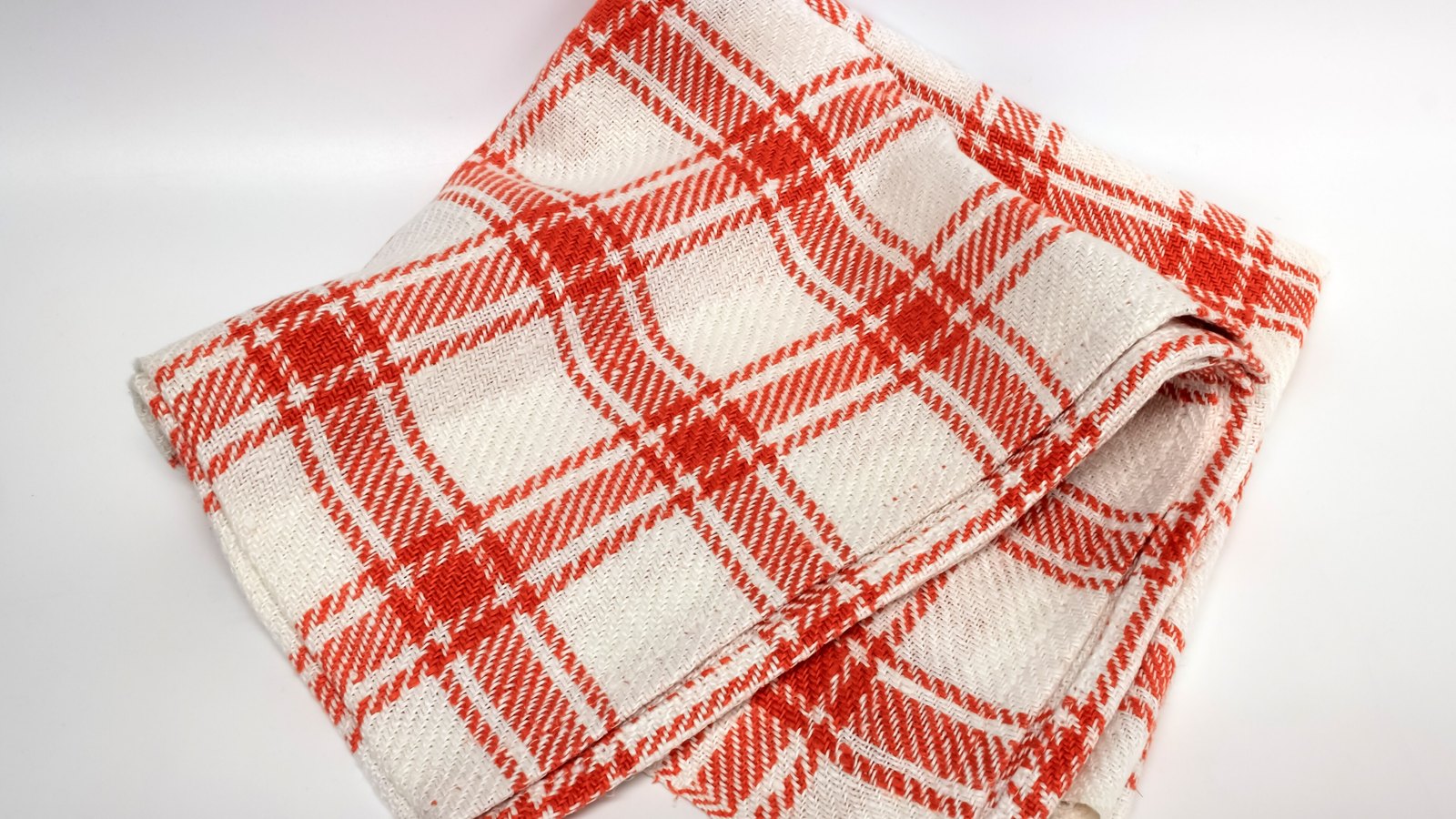
Bedding and table textiles also suffer less from fashion than clothing does. A plain white sheet or a checked tablecloth from the 1970s looks much the same as one made last year, so the secondhand version is not a compromise on style. The real questions are fiber, condition and size, in that order.
Linen, cotton or a union: tell them apart
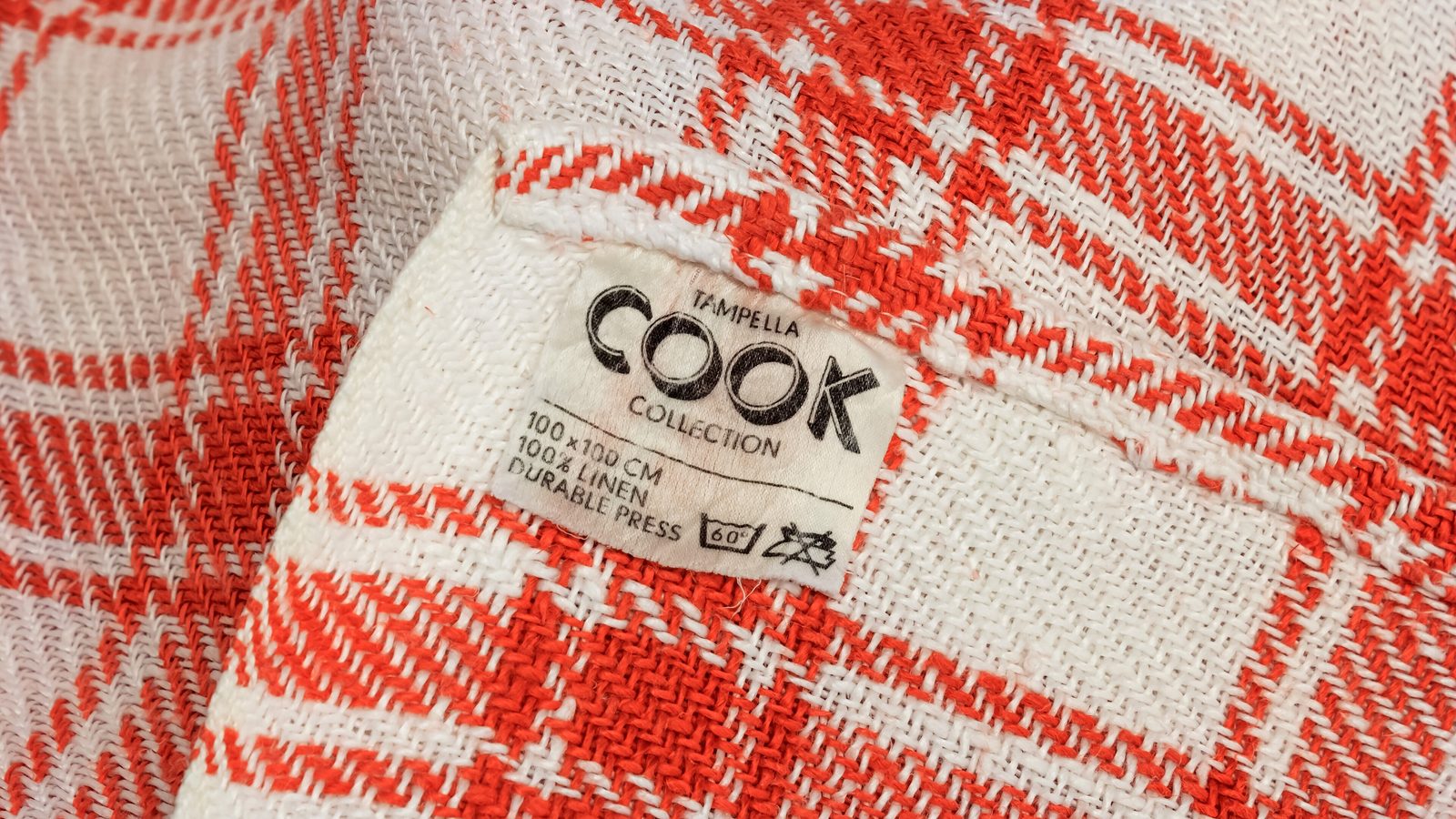
Labels on old household textiles are often missing, faded or written in another language, so learn to judge the cloth itself. Linen has a slightly irregular thread with small slubs, a cool feel against the skin and a dry, crisp handle. It creases sharply when you crush a corner in your fist. Cotton is more even, softer and warmer to the touch, and recovers from creasing more easily. Half-linen, sold as a union or a linen-cotton blend, sits between the two and was widely used for sheets and towels because it is cheaper to make and softens quickly. Linen is made from the bast fibers of the flax plant, it's strong and absorbent, and it dries faster than cotton, all reasons old linen sheets outlast so much else.
The fibers you will meet, and what they mean for you
| Fiber | How to recognize it | What to expect |
|---|---|---|
| Pure linen | Uneven thread, slubs, crisp handle, sharp creases | Very long life, softens with washing, creases freely |
| Half-linen (union) | Smoother than pure linen, still cool and dry | Durable and quicker to soften, often the best value |
| Cotton | Even thread, soft and warm, creases recover | Comfortable, thins faster at stress points |
| Polycotton | Slight sheen, pills on the surface, feels slippery | Easy care, does not soften with age, rarely worth a premium |
The ten-minute inspection
Unfold the piece completely. Shops fold textiles to hide the worst section, and a sheet that looks perfect in a neat square can have a thin patch across the middle where years of sleepers have worn it.
- 1
Hold it up to the light
Look for thin areas, especially across the center of sheets and along the fold lines of tablecloths. Light passing evenly through the cloth is fine; bright patches mean the weave is wearing out.
- 2
Check the hems and corners
Hems take the most stress in the wash. A loose hem is an easy repair; a frayed edge where the cloth itself has split is not.
- 3
Find every stain
Note where they are and whether they sit on the surface or have changed the color of the fiber itself. A stain in the middle of a tablecloth is a problem; one near a corner can be folded under or hidden under a plate.
- 4
Smell it
Mustiness usually washes out. A sharp, sour smell can mean mildew, which may have weakened the fibers beneath any visible spotting.
- 5
Measure it
Old sheets were cut for older bed sizes and are often longer than modern flat sheets but narrower. Measure against your mattress, including its depth, before assuming it will fit.
What old stains and yellowing mean
Yellowing along the folds of stored linen is common and usually comes from oxidation and residues left in the cloth before it was put away. It often lifts with a long soak. Brown spots, sometimes called foxing, are more stubborn, and rust marks from old pins or washing machines need a dedicated rust treatment rather than bleach. Our guide to removing stains by fiber type covers the chemistry in more detail.
- Fold-line yellowing — Usually washable. Soak before you judge it.
- Wine, tea and coffee — Often treatable if the fiber is still strong, though old tannin stains may leave a faint shadow.
- Rust — Treatable with a rust remover, but never with chlorine bleach, which can set it.
- Mildew spots — A warning sign. The stain may fade, but the fiber underneath can stay weak.
- Scorch marks — Light scorching sometimes fades; brown, brittle scorching is permanent damage.
Reviving it at home
Start with the gentlest treatment and work up. Linen tolerates hot water well, but old cloth deserves a cautious first wash, and the method in our guide to cleaning a secondhand buy before you use it applies here too.
- Soak overnight in cool water with a little detergent to loosen dust and old residues.
- For yellowing, soak again in warm water with an oxygen-based whitener, following the product instructions.
- Wash at a moderate temperature first; move to a hotter wash once you know the piece is sound.
- Dry on a line in the open air, where sunlight helps to brighten white linen.
- Iron while slightly damp, which is the only reliable way to get crisp linen without a press.
Store clean linen loosely folded in a cool, dry cupboard and refold it along different lines now and then so the creases do not wear. If you also keep wool blankets nearby, the advice in our article on moth prevention and storage applies to them. Keep any care labels you find; US rules require new garments and textiles to carry a care label that stays legible for the product's life, so a surviving label is a useful guide.
What to pay, and what it is worth
Price context matters more here than in most categories, because thrift stores often price household textiles by type rather than by fiber. A pure linen sheet can sit on the same shelf and at roughly the same price as a polycotton one, while a new linen sheet set from a mid-market brand commonly costs far more. That gap is the bargain. Embroidered and monogrammed pieces, hand-woven tablecloths and sets with matching napkins sell for more on resale platforms and at antique markets, where dealers know what they have.
Pay attention to condition rather than age. A plain, sound, well-sized piece is worth more to you than an older, more decorative one with a split along the fold. And remember that worn linen still has uses: as cleaning cloths, as a lining for bread baskets, or as fabric for napkins cut from the good parts.