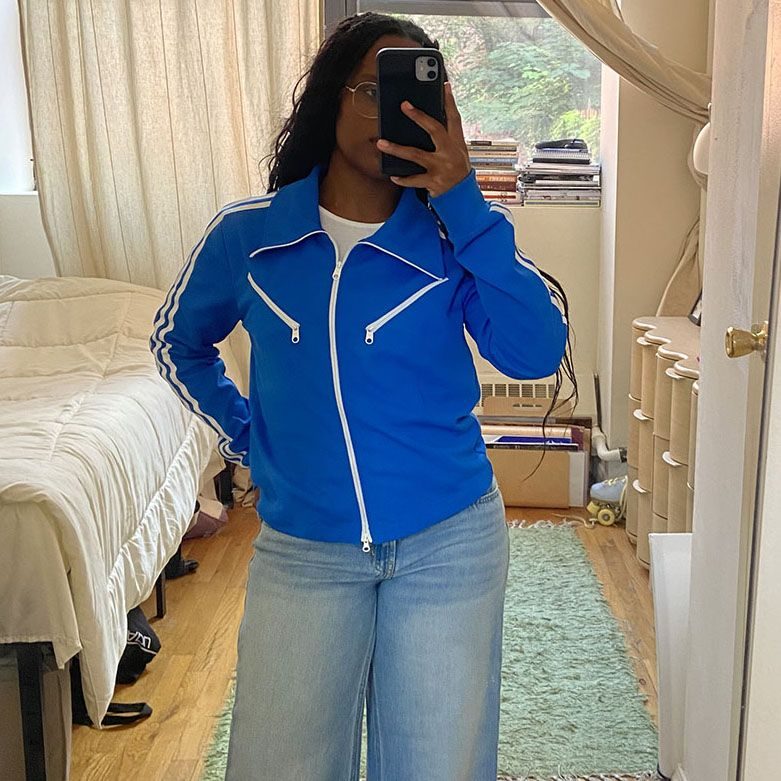
Diagnose before you replace. A zipper that closes and then splits open behind the slider has a worn slider, which is a cheap part, while a zipper with missing teeth needs the whole tape replaced, which is an hour of a tailor's time. The two faults look similar from the outside and cost very differently.
Know what you are looking at
Three zipper types cover almost every garment: nylon coil, molded plastic and metal. Coil is the most forgiving and the easiest to shorten, molded plastic is common on outerwear, and metal is found on denim and heavier jackets. The number stamped on the slider or the pull is the gauge, and #3, #5 and #10 are the ones you will meet most often, with bigger numbers meaning a heavier zipper. The zipper is older than most people guess: Whitcomb L. Judson of Chicago patented the original design it evolved from in 1892.
Sliders and tapes are not interchangeable between gauges or types, so a replacement part has to match both. Take the old slider with you, or measure across the closed teeth, because a #5 coil slider will not grip a metal #5 tape and a molded slider will not run on a coil.
The fault, the fix and what a tailor charges (estimates)
| Symptom | What is actually wrong | Do it yourself for | Tailor cost |
|---|---|---|---|
| Closes, then splits behind the slider | A worn slider that no longer meets the teeth | A $4 slider, or a squeeze with pliers | $20 to $35 |
| Sticks halfway up | A bent tooth, grit, or a missing pull tab | Nothing, using graphite or wax | $20 to $30 |
| Teeth missing over more than 2 inches | The tape is damaged and must be replaced | A $6 zipper plus the pick-out | $40 to $75 on a jacket |
| Button pulled off the placket | The thread shank broke under strain | Two minutes and doubled thread | $8 to $15 |
| Waistband elastic gone slack | Perished elastic inside the casing | Hard: the casing must be unpicked | $20 to $35 |
The pliers trick is worth knowing and easy to overdo. A worn slider can be closed very slightly by squeezing the body with parallel-jaw pliers, which restores enough grip for a few months. Squeeze the sides rather than the top, apply pressure gradually, and test on the tape after every adjustment, because a slider squeezed too far will not move at all.

Lubricate the right way
Use graphite from a pencil or paraffin wax from a candle, rubbed along the closed teeth and worked in by running the slider up and down. Both are dry, so they do not attract grit or mark fabric. Oils and petroleum jelly are the wrong answer on a garment that will be washed, because they leave a grease line that spreads with every cycle.
Buttons, hooks and snap fasteners
Sew a button on with a thread shank. Lay a matchstick or a thick needle across the button, stitch over it, then remove it and wind the remaining thread around the shank before finishing. The button then sits above the fabric rather than crushing the buttonhole, and it survives the strain that pulled the last one off. On a coat, add a small backing button on the reverse of the placket.
Denim tack buttons and snap fasteners are different jobs, because they are pressed rather than sewn. A tack button needs a hammer and an anvil, or a press if you have one. Snap fasteners need pliers made for the size, and 15 mm, about 5/8 inch, is the common size on shirts and childrenswear, so buy the pliers and the fasteners together rather than guessing. Hooks and eyes on a waistband should be replaced with the same gauge, and the eye should be sewn over its bars at both ends.
Elastic is the one fault worth paying for. Replacing a waistband means unpicking the casing, threading new elastic and closing it invisibly, which is fiddly rather than difficult and is quick for a tailor with a machine. It's usually cheaper than replacing a garment that fits well everywhere else.
Five things for a repair tin
This is the whole kit for everything except elastic, and it costs less than one zipper replacement at a tailor. Prices are shown only where we confirmed them on the brand or retailer page in Oct 2026.
 Buy two
YKK
Replacement zipper, #5 coil, about 24 in
A spare zipper in a common gauge means a jacket stays wearable instead of waiting weeks for an order. Buy a closed-end and a separating version.
Check price
Zipper Rescue
Zipper repair kit, sliders and pliers
The cheapest possible fix for a worn slider, and the kit covers the gauges found on jeans, jackets and dresses. It solves the common fault without touching the stitch line.
Check price
Gütermann
Polyester thread set, 10 spools
Polyester for woven cloth and buttons, because it holds under strain where cotton thread abrades. Keep wool thread for knits, where polyester would saw through the loops.
Check price
Prym
Snap fastener pliers and 15 mm (about 5/8 in) studs
Presses both halves of a snap fastener cleanly, without the hammer marks a hand set leaves. Worth owning if you repair childrenswear or work shirts, which is where fasteners fail.
Check price
John Lewis
Button assortment tin, 100 pieces
A matching button is the only thing standing between a shirt and a bag of rags, and a tin costs less than one replacement shirt. Spare buttons sewn inside a lining are worth harvesting.
Check priceWhat a repair costs against replacing
Buttons are always worth fixing: cheap at a tailor, or free at home. Sliders are almost always worth fixing, since the part is cheap. Zippers are worth fixing on outerwear and tailoring that fits, and rarely on anything cheap to replace.
The exception is a garment you would struggle to replace at any price, which is where secondhand shopping and repair meet. A well-cut jacket in your measurements with a dead zipper is still a well-cut jacket in your measurements, and the cost of the fix is the price of not having to find another one.