Build the routine around four jobs, in this order: remove what is on the skin, put water back, seal it in, and block ultraviolet. Three of the four can be bought as a refill or a solid. Actives come last, once the routine holds.
The barrier is the outer layers of the epidermis: flattened cells held in a lipid matrix of ceramides, cholesterol and fatty acids. Deplete that matrix, with a foaming cleanser twice a day, three actives at once, or dry air, and water escapes faster while irritants get in. It reads as stinging and tightness.
The fix isn't a longer routine. It's fewer steps, in an order that lets each one work, repeated long enough for skin to settle. That takes weeks, which is why so many people give up on a good routine early and blame the products.
The order, and the job each step does
Water is trapped from the outside in: a humectant draws water into the surface layer and an occlusive stops it leaving again. Done the other way round, both are wasted.
- 1
Cleanse at night, water in the morning
A syndet bar or a non-foaming cream cleanser. A squeaky finish means the lipids went down the drain with the grime. Keep showers short and warm, not hot: the American Academy of Dermatology suggests five to ten minutes for dry skin, then patting dry instead of rubbing.
- 2
Put a humectant on damp skin
Glycerin or panthenol within a minute of patting dry. They hold water, so they need water present and something on top to keep it there.
- 3
Moisturize with lipids, not just water
A cream or ointment rather than a lotion; the AAD notes creams and ointments are more effective for dry skin. Look for glycerin, dimethicone, petrolatum, shea butter or similar near the top of the list.
- 4
Seal the dry areas at night
Thin petrolatum over cheeks, nose corners and lips. The most effective occlusive in general cosmetic use, and among the cheapest. On top of the cream, not instead of it.
- 5
Protect in the morning, last
Broad-spectrum sunscreen, SPF 30 or higher, which is what the AAD recommends. It's the step with the strongest claim to slowing visible aging, and the one most people under-apply.
What each step does, and the format that wastes least
| Step | What it does | Lowest-waste format | What to watch |
|---|---|---|---|
| Cleanse | Lifts sunscreen and oil without stripping lipids | Solid bar in a paper wrap | Syndet base, not true soap |
| Hydrate | Draws water into the surface while it is damp | Refill pod into a reusable bottle | Pod must fit your bottle |
| Moisturise | Replaces ceramides and slows water loss | Refill pod into the original jar | Check pod volume vs jar |
| Seal | Occludes the dry patches overnight | One large tin, bought rarely | A little goes a long way |
| Protect | Blocks ultraviolet, a major driver of visible aging | Large pump, or a pod refill | Use enough, every morning |
Where refills exist, and where they do not
Refillable packaging has arrived unevenly. Some moisturizers, serums and a few sunscreens now sell a pod or refill, at very different discounts: Fenty Skin's Hydra Vizor refill is $40 against $45 for the full size (fentybeauty.com, Oct 2026), barely 11 percent. Cleansers and body sunscreen mostly haven't followed, because in a water-based product the packaging is part of how it's delivered.
That's fine, because the alternatives do the same job: a solid bar has no packaging to refill, and a large tub of plain ceramide cream is usually the cheapest way to buy that ingredient.
Six products that cover all five steps
All six are fragrance-free; patch test anything new on the inner arm first. Prices are shown only where we confirmed them on the brand or retailer page in Oct 2026.
 Cheapest step
Dove
Sensitive Skin Beauty Bar, 4 x 100g
A syndet bar rather than true soap, with no fragrance. Paper wrap, no bottle.
Check price
Byoma
Hydrating Serum, refill pod
Clicks into the original bottle, so the casing is bought once. Glycerin and panthenol sit in the first half of the list, where a humectant has to be.
Compare the refill Best refill
Kiehl's
Ultra Facial Cream with Squalane, refill pod
Ceramides and squalane in a cream that suits most skins. The pod skips the lid and carton; check its price per milliliter against the jar on the day.
See the refill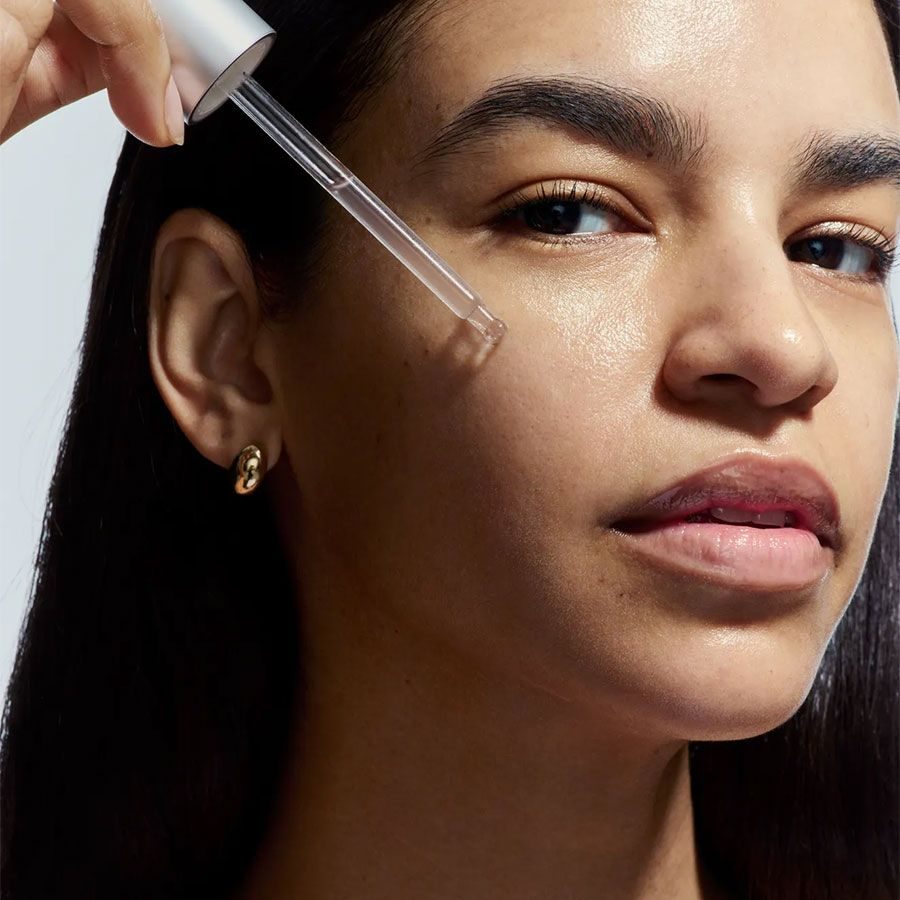
CeraVe
Moisturizing Cream, 454g
Ceramides and petrolatum, fragrance-free, and usually the cheapest per gram of anything here. The tub is plastic, but it's one tub instead of several small tubes.
Check price
Aquaphor
Healing Ointment, 396g
Petrolatum first, lanolin third. If you react to lanolin, this is the product that will tell you before you buy an expensive balm built on the same ingredient.
Check priceEltaMD
UV Clear Broad-Spectrum SPF 46
Fragrance-free, niacinamide high in the list, and known for sitting well under makeup. It's the most expensive per milliliter here, and the one step worth paying for.
Check priceHow to add actives without starting again
- One at a time, two weeks apart — Niacinamide, an acid, a retinoid and vitamin C in one week is how a stable routine goes wrong. Add one, then wait two weeks.
- Keep exfoliants and retinoids on separate nights — Both on the same night is the fastest route to raw, stinging skin, and it can take weeks to undo.
- Strip back to three steps when it stings — For two weeks, use only cleanser, cream and sunscreen. Most irritation settles in that window.
- Do not confuse purging with damage — Blocked pores in the places you normally break out can settle. Redness and flaking across the whole face will not.
What the routine costs to run
Running costs depend on what you pick and how fast you use it, and sunscreen is usually the biggest line because you need a generous amount every day. A refill pod over a new jar saves some money and more packaging, but the gap varies a lot by brand. Do the per-milliliter sum before assuming the refill wins.
The larger saving does not look like one: finishing what you own before buying a sixth product. A barrier routine is deliberately dull, and its value is that it repeats for a year without a single decision.