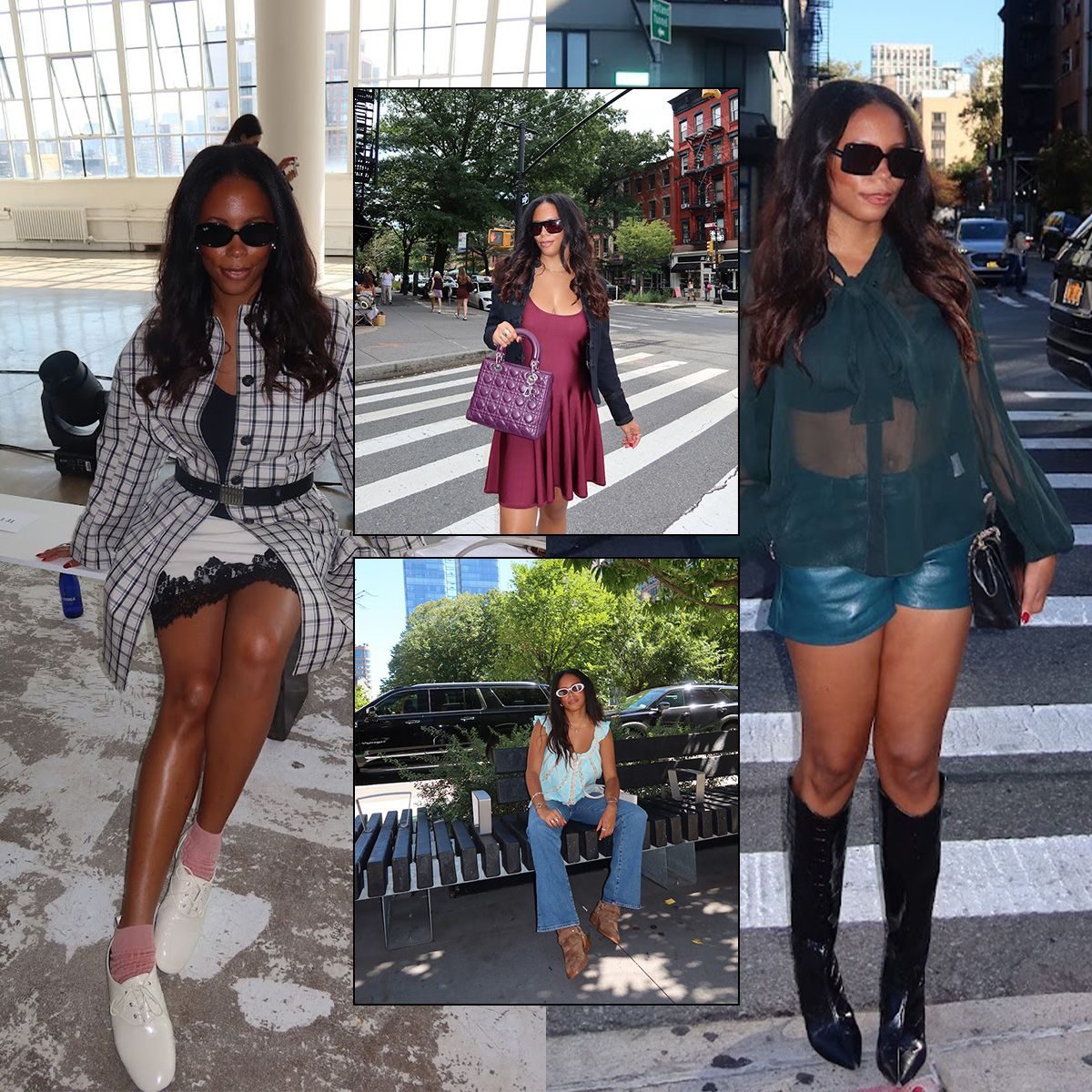
Five evening outfits, every piece vintage, alterations included, for roughly $439 by my estimate. Bought new, comparable looks could easily run to $2,670 or more (also an estimate). Evening wear is a strong category for secondhand, because party clothes tend to be worn a handful of times and often come to resale in good shape.
The hard part is sizing, not price. US women's sizes have changed a lot. The National Bureau of Standards created a size system in 1958; it became voluntary in 1970 and was withdrawn entirely in 1983, and ASTM published its own voluntary body-measurement standard in 1995. So a vintage label number tells you little. Work from flat measurements.
Sizing: read the measurements, not the label
Ask every seller for four numbers: bust, waist, hip and the length from shoulder seam to hem. If a listing can't supply them, the seller probably hasn't measured, and return shipping can wipe out the saving.
Vintage label sizes, roughly converted (varies by maker)
| Label | Modern equivalent | Bust | Waist |
|---|---|---|---|
| Vintage 8, 1950s | US 0-2 | 32" | 24" |
| Vintage 10, 1960s | US 4 | 33" | 25" |
| Vintage 12, 1960s | US 6 | 34" | 26" |
| Vintage 14, 1960s | US 8 | 36" | 28" |
| Vintage 10, 1970s | US 6 | 35" | 27" |
| Vintage 12, 1980s | US 8-10 | 37" | 29" |
| Modern US 8 | reference point | 36" | 29" |
As a rough rule, vintage labels from the 1960s tend to run a couple of sizes smaller than modern US sizes, and 1980s labels about one. That's why people say vintage runs small. It's more that the labels moved. Makers varied a lot, so treat the table as a starting point and trust the tape measure.

What a tailor can and cannot fix on vintage
Vintage construction is often generous in some seams and unforgiving elsewhere. These are rough cost estimates for an ordinary city, plus the jobs that tend to damage a garment rather than save it. Get a quote before you buy.
- Take in a side seam
- $18-30, the most useful vintage alteration there is
- Shorten a hem, plain
- $15-25, routine on a satin or velvet skirt
- Shorten a hem, beaded or sequinned
- $25-40, the hem must be re-finished by hand
- Replace a period zip
- $25-40, worth it on anything over $60
- Let out a seam
- $20-35, possible only if the seam allowance survived
- Re-line a bodice
- $60-90, only sensible on a $100-plus piece
- Shorten shoulder straps
- $20-30, the cheapest way to rescue a 1970s dress
Alteration costs on vintage evening wear
Two of these are traps. Older garments often have narrow seam allowances, so letting something out may be impossible even when a tailor says it might work. And re-lining a beaded bodice can mean removing the beading, which few tailors will guarantee.
Five evening outfits, costed
Vintage cost against the new equivalent (estimates)
| Outfit | Vintage cost incl. alterations (est.) | New equivalent (est.) |
|---|---|---|
| 1. Bias-cut silk slip dress | $65 plus $25 alterations | $420 |
| 2. Beaded top with black wool trousers | $42 plus $30 plus $8 hem | $390 |
| 3. Velvet blazer with silk midi skirt | $48 plus $36 | $560 |
| 4. Full-length sequin gown | $85 plus $30 hem = $115 | $850 |
| 5. Lace top with satin midi skirt | $38 plus $32 | $450 |
| Total | $439 | $2,670 |
The fourth row is why vintage pays. Full-length sequin gowns from the 1970s and 1980s turn up in large numbers, since they were a standard party buy and many were worn only a few times.
The bias-cut slip dress is the one to be careful with. Silk cut on the bias can stretch under its own weight, so it may hang longer over time, and it doesn't take kindly to being taken in at the waist. Buy for the bust and have the straps shortened.

How to find each piece
- 1
Search by decade as well as by garment
A 1970s sequin gown and an unlabelled sequin gown are the same object at different prices. Naming the decade filters out the modern party dresses that sit in the same category and cost five times more.
- 2
Filter by fabric, never by brand
Search silk, velvet, satin and beading. Brand filters on vintage listings mostly return 1990s high-street labels that were never worth what sellers now ask for them.
- 3
Ask for the measurements in the first message
Send one message asking for bust, waist, hip and length before you bid. Sellers who measure answer within a day; sellers who do not never will, and you have saved a return.
- 4
Budget the alteration before you bid
A $65 dress that needs $25 of work is a $90 dress. Decide before the auction closes whether $90 is still a good price, because it usually is, and the bid you place should reflect the total.
- 5
Buy the beaded piece even if it needs work
Beading cannot be reproduced cheaply, which is why it holds value. A beaded top at $42 with $30 of alterations is still cheaper than any new evening top with equivalent work.
Fabrics that survive and fabrics that do not
- Silk, velvet and wool: buy freely — All three improve with age and tolerate dry cleaning. Velvet crushes, so check the pile under the arms and across the seat before buying.
- Beading and sequins: check every thread — Run a hand over the surface and look for loose beads. Missing beadwork is fiddly to repair, and matching old beads is often impossible.
- Latex-backed and glued trim: avoid — Glue tends to fail with age, so trim attached with adhesive may lift. Often it can only be replaced, not repaired.
- Anything with rubberised elastic: walk away — Elastic perishes long before the fabric does. A vintage waistband may need new elastic, and it rarely looks quite like the original afterward.

Five vintage searches for evening wear
Search terms that return wearable vintage rather than costume. Prices are shown only where we confirmed them on the brand or retailer page in Oct 2026.
Best valueVintage silk
Bias-cut slip dress
Ask for the length before you bid, since bias-cut silk can drop with wear. Have the straps shortened rather than the waist taken in.
Search listingsBeaded vintage
Embellished cocktail top
Glass beads rather than plastic, and threads rather than glue. Turn it inside out: if the reverse is a mess of loose ends and knots, the beading was done cheaply and will shed.
Search listings
Vintage tailoring
Velvet evening blazer
Velvet over a silk skirt or over plain black wool trousers is the most reusable evening purchase here. Crushed velvet at the elbows cannot be restored, so look at the arms first.
Search listings
1970s occasion wear
Full-length sequin gown
Supply is large and demand is seasonal, so prices often soften after the holidays.
Search listings
Vintage lace
Lace top with a satin midi skirt
Lace tears along the seams rather than across the panel, so check the shoulder and side seams specifically. Both can be re-stitched, but only if the net backing is still intact.
Search listings