What a designer piece resells for is decided less by craftsmanship or rarity than by one thing: whether the maker keeps raising prices and never discounts. Chanel, Hermès and Louis Vuitton have done that for twenty years, which is why a used classic trades near its original retail while a mid-market logo tote loses two-thirds of its value on the way home.
This column is written for buyers, not sellers. Resale value is the most honest quality signal in fashion: it aggregates the judgment of thousands of people who paid real money for the same object. Use it to decide what is worth paying for, then ignore it once the piece is yours.
The rule that explains most of the market
When a brand never discounts and raises prices on a schedule, its secondhand prices are anchored to a moving floor. A bag whose retail price keeps rising only needs to hold a stable fraction of a number that keeps rising. Hermès is the textbook case: founded in Paris in 1837 by Thierry Hermès as a saddlery and harness maker, it still trades on leatherwork.
Reverse that and it inverts. A brand that runs its own end-of-season sale teaches every buyer that retail is negotiable, and secondhand prices fall to the clearance price almost immediately. That is why mid-market bags tend to recover a small share of retail and the classics a much larger one.
What holds and what doesn't (estimates)
| Category | Retail new | Typical resale | Recovery |
|---|---|---|---|
| Hermès Birkin or Kelly, neutral leather | $10,000+ | Often at or above retail | 100%+ |
| Chanel Classic Flap, caviar, black | $10,000+ | $5,000–9,000 depending on year | 55–85% |
| Louis Vuitton monogram canvas tote | $1,600–2,400 | $800–1,400 | 50–70% |
| Dior Saddle, current line | $3,800 | $1,800–3,000 | 50–75% |
| Mid-market contemporary handbag | $300–500 | $60–150 | 20–35% |
What holds value
- Anything the maker refuses to discount — Louis Vuitton has never held an end-of-season sale. Neither has Hermès. Chanel raises prices several times a year rather than marking anything down. That policy is worth more to resale than any design decision.
- Neutral leather and classic hardware — Black, brown, tan and navy outsell every seasonal color, and gold hardware outsells silver on the classic models.
- The middle of the size range — The most-produced size of a popular model is also the most liquid, which keeps the spread between asking and sold prices tight.
- Archive vintage from a defining period — Margiela 1989 to 1997, Helmut Lang through the 1990s, early Mugler and 1980s Alaïa have no retail equivalent, so price is set by scarcity. Margiela's house dates to 1988, and Galliano's Dior run was 1997 to 2011, which is the kind of defined window that holds value.
What does not
- Accessible luxury handbags — Michael Kors, Kate Spade, Ted Baker and modern outlet Coach tend to recover a small share of retail, and fees consume much of that. The exception is 1990s full-grain leather Coach with the metal tag. Coach is a New York house; the older full-grain pieces are the collectible ones.
- Seasonal colors and printed canvas — A limited-edition print is worth more on release and less with every season, because the buyer who wanted it bought it then.
- Anything in visibly worn condition — Corner wear, ink marks, tobacco odor and interior staining do not shave value, they remove it. A bag needing restoration is worth much less than a clean one.
- Shoes and sunglasses — Shoes lose value faster than anything else: the fit has already been shaped to someone else's foot. Sunglasses resell badly because they are the hardest category to authenticate.
- eBay
- A percentage final value fee, charged on the total including shipping; check the current fee page.
- Poshmark
- A flat fee on small sales, then a percentage; check the current fee page.
- Depop and Grailed
- A percentage of the sale price; check each platform's current fees.
- Vinted
- No seller fee, but the buyer pays a protection fee, which caps the price you can achieve.
- The RealReal
- Tiered commission that varies by price band, and they set the price.
At a glance: what the platform takes
Where the money actually goes
- 1
The platform commission
A meaningful share of the sale price, depending where you sell, and taken before you see anything.
- 2
Authentication
Instrument-based verification costs a fee per item: on a bag worth thousands it's the cheapest insurance available, on a cheap bag it can be more than the margin.
- 3
Restoration
Corner repainting, interior cleaning and relining add up. A bag needing restoration also sells for less and takes longer, so the deduction is double.
- 4
Shipping and insurance
Signature delivery and full insurance on a handbag aren't cheap. Platforms pass some of this to the buyer.
- 5
Price reductions
Items that do not sell in thirty days get relisted lower, and that reduction never shows up in the headline number a seller quotes.
- 6
Tax
Collected on the sale and paid on the purchase: a small percentage on each end, but it removes any remaining thin margin on mid-market goods.
Add those up and the recovery on a mid-market bag rarely reaches the number the retail comparison suggests. As an illustration, a $400 bag sold for $120 leaves the seller well under $100 after commission and shipping.
How to use this when you buy
As a rough rule of thumb, pay well below current retail for a bag still in production, and less again for anything seasonal or discontinued. For vintage the ceiling is the median of recent sold listings, not the highest asking price.
Buy the thing you will use. A bag carried for eight years and sold at half of retail cost less per wear than a fast-fashion bag replaced twice. Resale value is a signal about quality and desirability, not a portfolio.
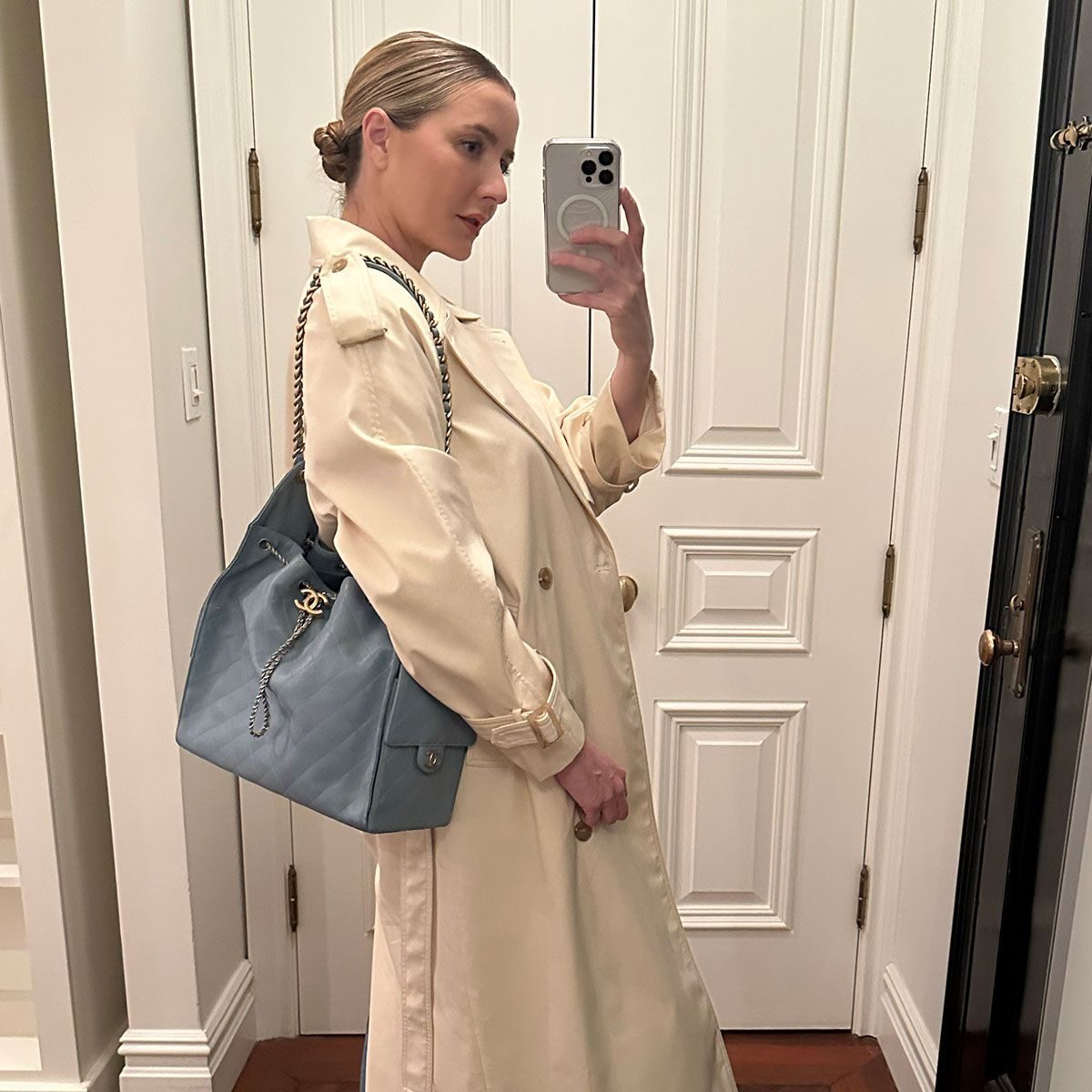
Five resale buys worth the search
None of these is a recommendation to buy as an investment; they are the categories where the math is least likely to go wrong. Prices are shown only where we confirmed them on the brand or retailer page in Oct 2026.
Best hold valueChanel
Classic Flap, caviar, black
Among the strongest resale performers in modern bags, and caviar leather is why: it resists the corner wear that costs lambskin much of its value. Verify the serial number first.
Search The RealRealLouis Vuitton
Monogram Speedy 30
The deepest resale market in luxury, which makes it easy to buy and to sell. Expect strong recovery on a clean example with the original padlock.
Search eBay
Maison Margiela
Line 0 Artisanal piece
No retail equivalent and no way to increase supply, the strongest position any garment can occupy. Condition matters less here, because the piece is reconstituted by design.
Search Grailed
Vintage Coach
1990s full-grain leather bag
The exception to the accessible-luxury rule. 1990s American production in full-grain leather has a genuine collector market, and the leather outlasts anything the brand makes now.
Search Poshmark
Dior
Saddle bag, current line
A revival that stuck, so the buyer pool is large and supply is not exhausted. Buy the neutral leathers and avoid the printed editions, which recover half as much.
Search Depop