Two questions decide every vintage jacket. Do the shoulders fit, and is the front canvassed rather than glued? The first cannot be fixed by any tailor at a sensible price. The second can, and it is the difference between a jacket that improves with wear and one that bubbles after two dry cleans. Everything else is arithmetic you can do before you reach the till.
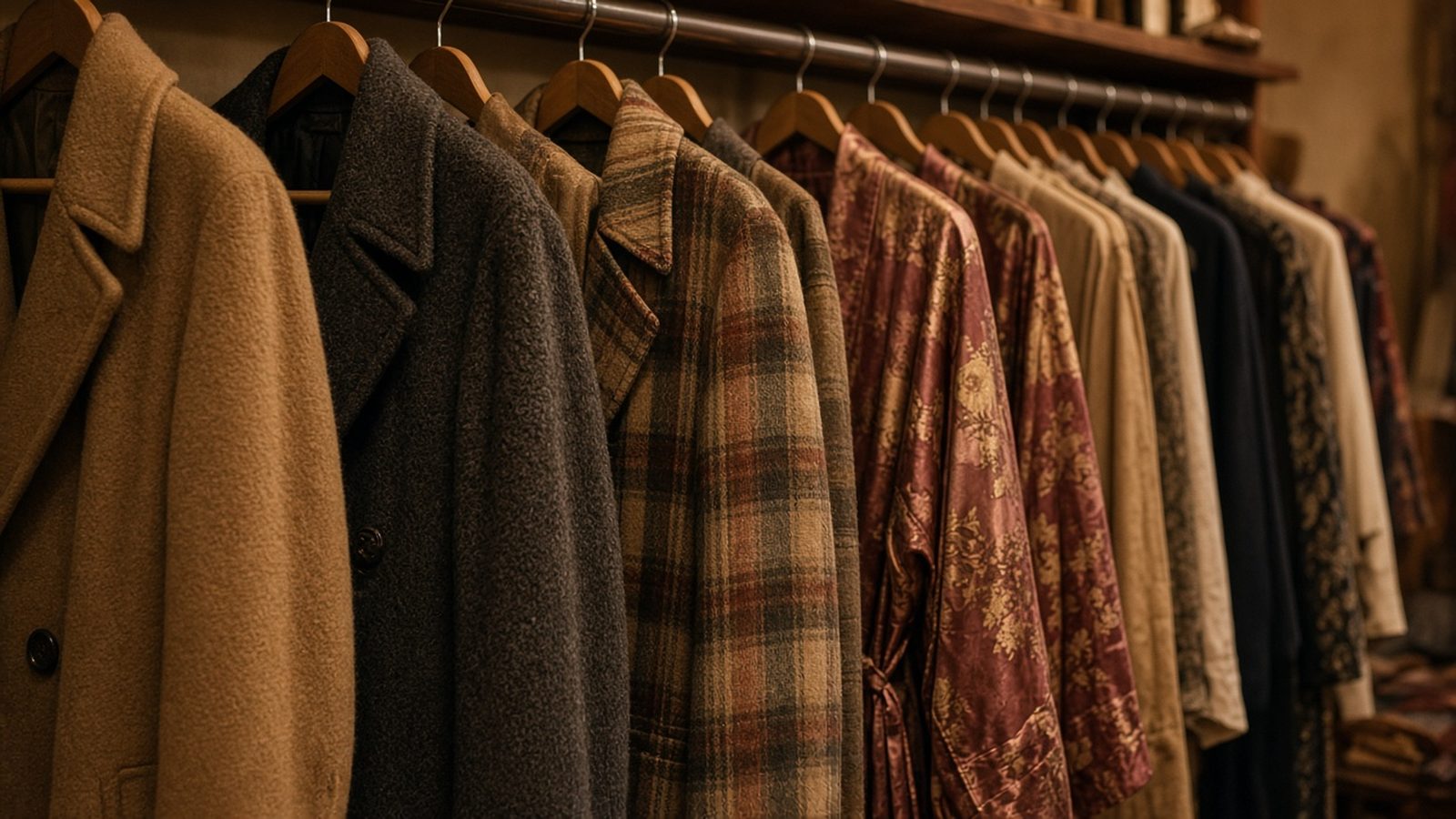
Vintage is where good tailoring is cheapest, because the people who bought it new are no longer the people buying now. A fully canvassed jacket from the 1970s or 1980s costs less today than a fused one from a mid-market chain, and it will outlast it several times over. Wool is a big part of why: Woolmark describes it as naturally crease-resistant, and US labels must list each fiber at 5 percent or more by percentage, so a "100% wool" label is a claim you can check.
The shoulder is the whole decision
A jacket that is too tight at the waist can be let out, and short sleeves can sometimes be lengthened. A jacket whose shoulder seam sits past the end of your shoulder cannot be rescued: narrowing a shoulder means removing the sleeve, recutting the armhole and resetting everything, at real expense, and it rarely looks as if it was made that way.
Two further shoulder checks. Turn your head in the mirror: if the collar lifts away from the neck at the back, the neck and shoulder balance is wrong, which is another expensive fix. And check that the shoulder line follows your own rather than sitting above it, as an 1980s padded jacket will. Sizes drift, too: US clothing-size standards became voluntary in 1970 and were withdrawn in 1983, so measure rather than trusting a vintage label.
The pinch test: canvas or glue
- 1
Pinch the lapel between finger and thumb
Work halfway down, between the top buttonhole and the lapel edge. A canvassed jacket has a floating layer of hair canvas inside that moves independently of the cloth: two layers that slide against each other, not one stiffened sheet.
- 2
Feel the chest below the lapel
A fused jacket feels uniformly flat and stiff across the front. A canvassed one has a soft, slightly uneven give, because the canvas is attached only at the edges.
- 3
Look at how the lapel rolls
A canvassed lapel curves away from the chest in a roll; a fused lapel folds on a hard crease, like cardboard. The clearest visual difference there is.
- 4
Check the inside chest seam
Turn the jacket inside out. A canvassed front often shows a floating layer behind the lining and a row of tacking stitches. A fused jacket shows nothing, because there is nothing to show.
- 5
Check the buttonholes
Hand-worked buttonholes are slightly irregular, raised and sewn with a gimp thread inside; machine buttonholes are uniform and flat. A rounded, hand-sewn lapel buttonhole is a strong sign of a high-end maker.
- 6
Then discount for imitation
Pick stitching and hand-look buttonholes are now produced by machine. The pinch test is harder to imitate than the decoration, so trust your fingers over your eyes.
Alteration costs and whether they pay back (estimates)
| Alteration | Typical cost | Worth it? |
|---|---|---|
| Sleeve shortened from the cuff | $25–45 | Yes, unless the sleeve buttons are functional, which makes a simple job into a rebuild |
| Sleeve shortened from the shoulder | $80–160 | Only on a jacket worth $250 or more; it resets the whole armhole |
| Waist suppressed at the side seams | $30–60 | Yes. The cheapest way to make a boxy jacket fit properly |
| Jacket shortened at the hem | $60–120 | Rarely. It pulls the pockets too close to the hem and unbalances the proportions |
| Shoulders narrowed | $180–350 | No, in almost every case. Buy a jacket that fits instead |
| Buttons replaced with horn or corozo | $20–50 | Yes. The best $30 you can spend on a cheap jacket |
| Underarm and lining repairs | $25–60 | Yes, if the shell is sound. Photograph the damage first; sweat rot spreads |
Fabric and labels: what actually indicates quality
Cloth weight is the fastest proxy for quality: a jacket that feels substantial survives decades, while a thin, floppy cloth collapses at the chest within a season. Verify the canvas with the pinch test before you commit.
- Full canvas, Italian
- Kiton, Brioni, Caraceni, Rubinacci. Secondhand prices are a fraction of new (est.).
- Full canvas, English
- Anderson & Sheppard, Huntsman, Gieves & Hawkes, Kilgour. Often reasonable secondhand (est.).
- Half canvas, workhorse
- Samuelsohn, Southwick, Hickey Freeman, Chester Barrie. Often the best value here (est.).
- Fused, fashion
- Most department-store suits from the 1980s onward. Judge these on fit and cloth.
- Cloth marks to look for
- The Harris Tweed orb on the selvedge and a Woolmark tag.
- Country of origin
- Sewn into the collar. A "Made in Italy" jacket should say so there, not on a hang tag.
At a glance: makers worth the rack space

What to pay
By my estimates (Oct 2026), a fully canvassed vintage wool jacket in wearable condition is often an $80–250 buy, and half-canvassed less. Add alterations and a well-chosen jacket can still come in at a fraction of a new canvassed equivalent. That is the whole argument for buying vintage tailoring.
Walk away on three things: a shoulder that does not fit, functional sleeve buttons on sleeves that are too short, and any smell of sweat that does not lift after a day in fresh air. The third is permanent damage rather than dirt.
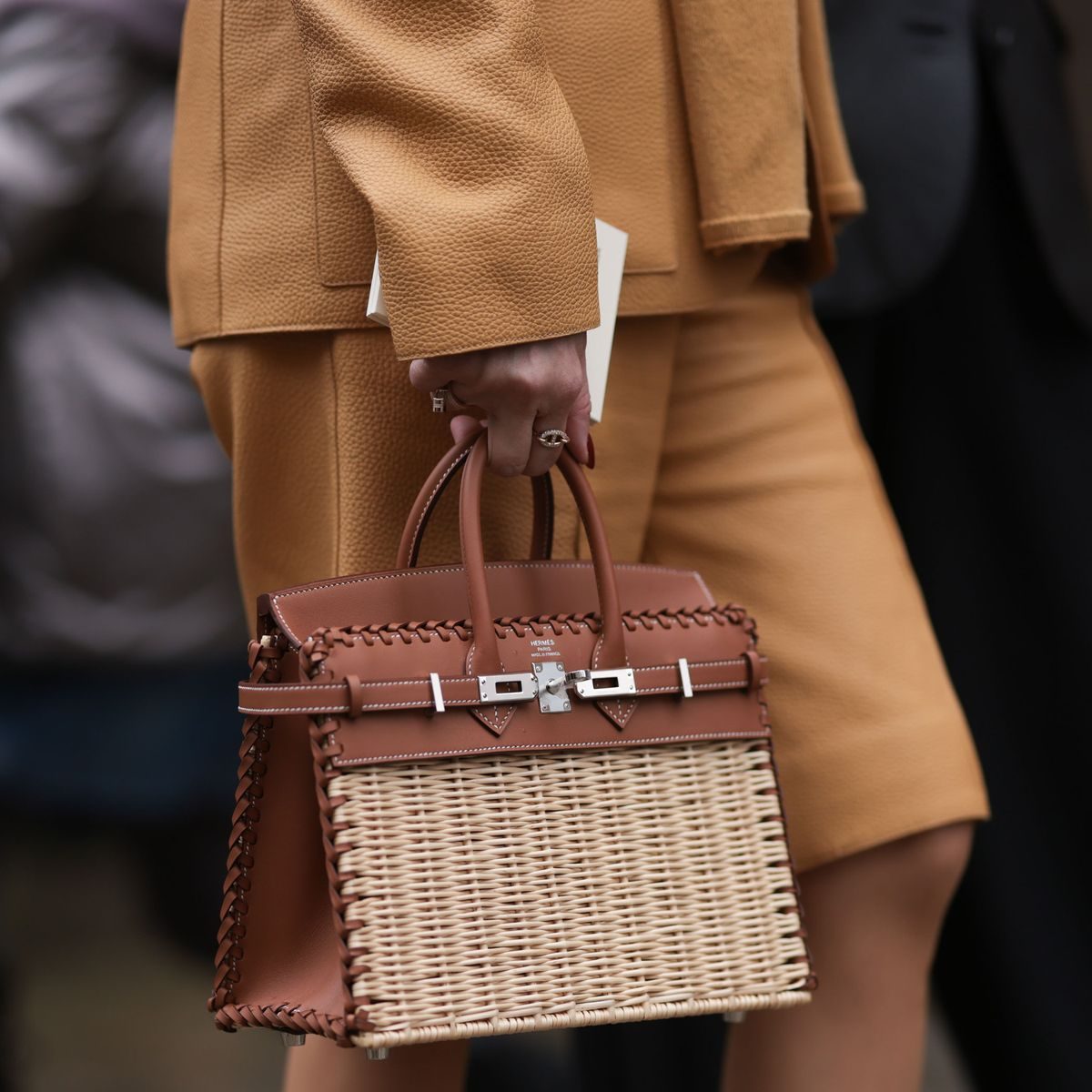
Five jackets worth altering
Anything over that and the total stops making sense at these levels. Prices are shown only where we confirmed them on the brand or retailer page in Oct 2026.
Best valueChester Barrie
Half-canvassed wool suit jacket
The most reliable half-canvas make of the 1980s and 1990s and the least risky buy here. The cloth is usually a solid worsted that presses cleanly.
Search VintedHarris Tweed
Orb-marked tweed jacket
Tweed survives decades of someone else's wear, and the orb mark certifies the cloth. Check the underarm lining, where tweed jackets fail.
Search Etsy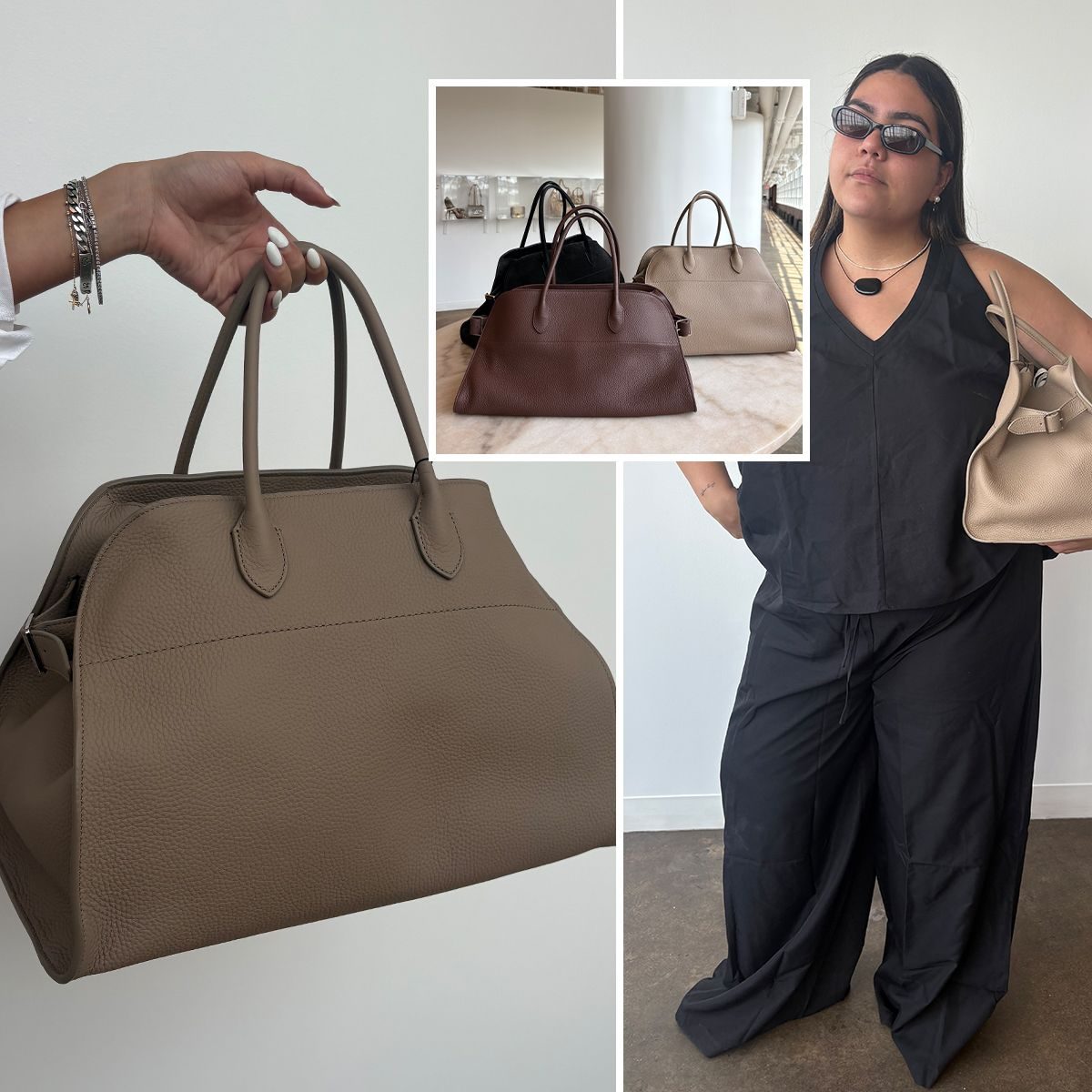
Kiton or Brioni
Full-canvas wool blazer
Full canvas and hand finishing at a fraction of retail, but only if the shoulder fits: the alteration a bad shoulder needs is not affordable. Verify with the pinch test.
Search The RealReal
Anderson & Sheppard
Savile Row tweed jacket
The soft English drape cut is forgiving across sizes, which makes it a safer buy than a structured Italian jacket. Check the sleeve length first.
Search eBay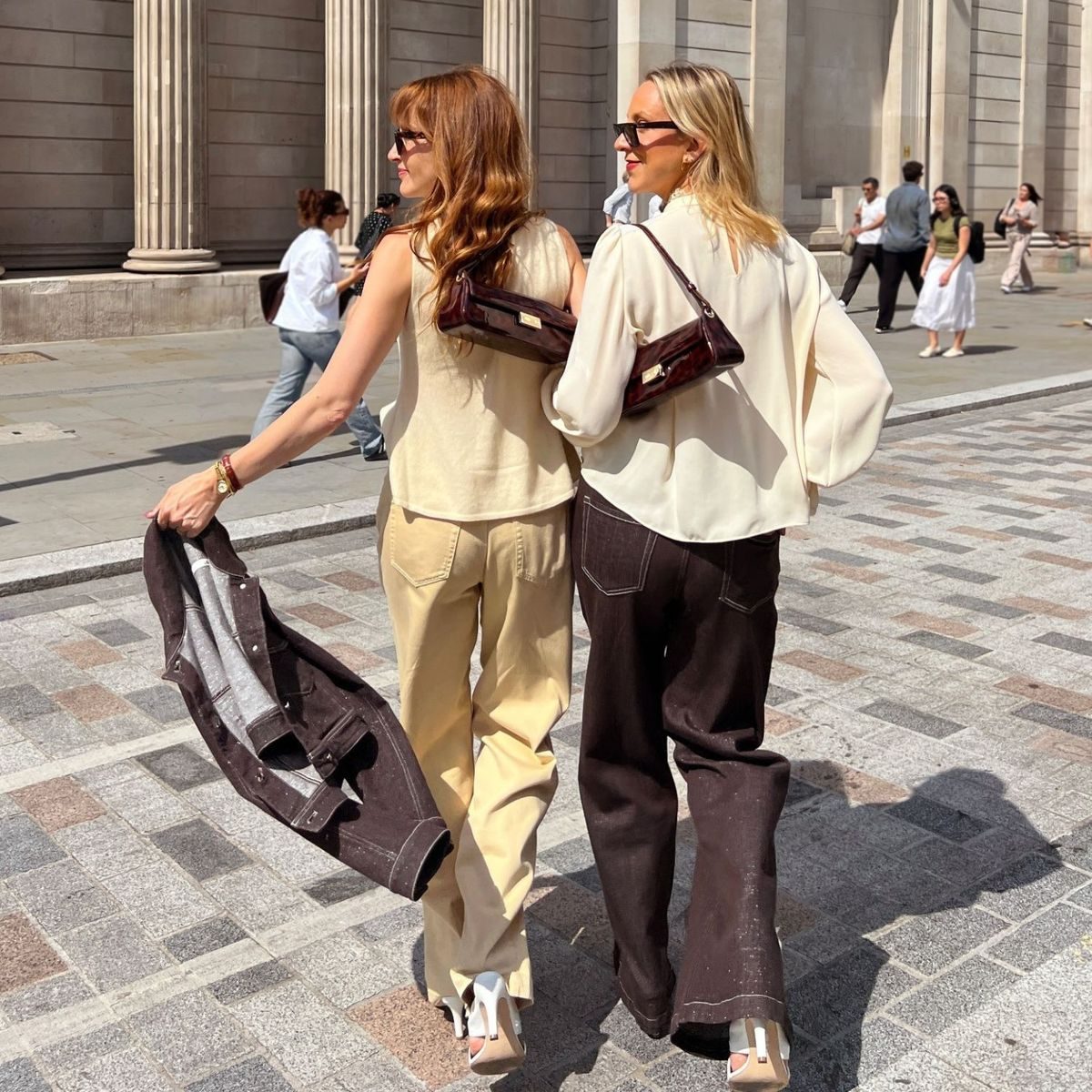
Unbranded British
Dense melton or herringbone jacket
No label, no premium, and often better cloth than a branded jacket at twice the price. Judge it on the pinch test, the cloth weight and the shoulder seam.
Search Poshmark