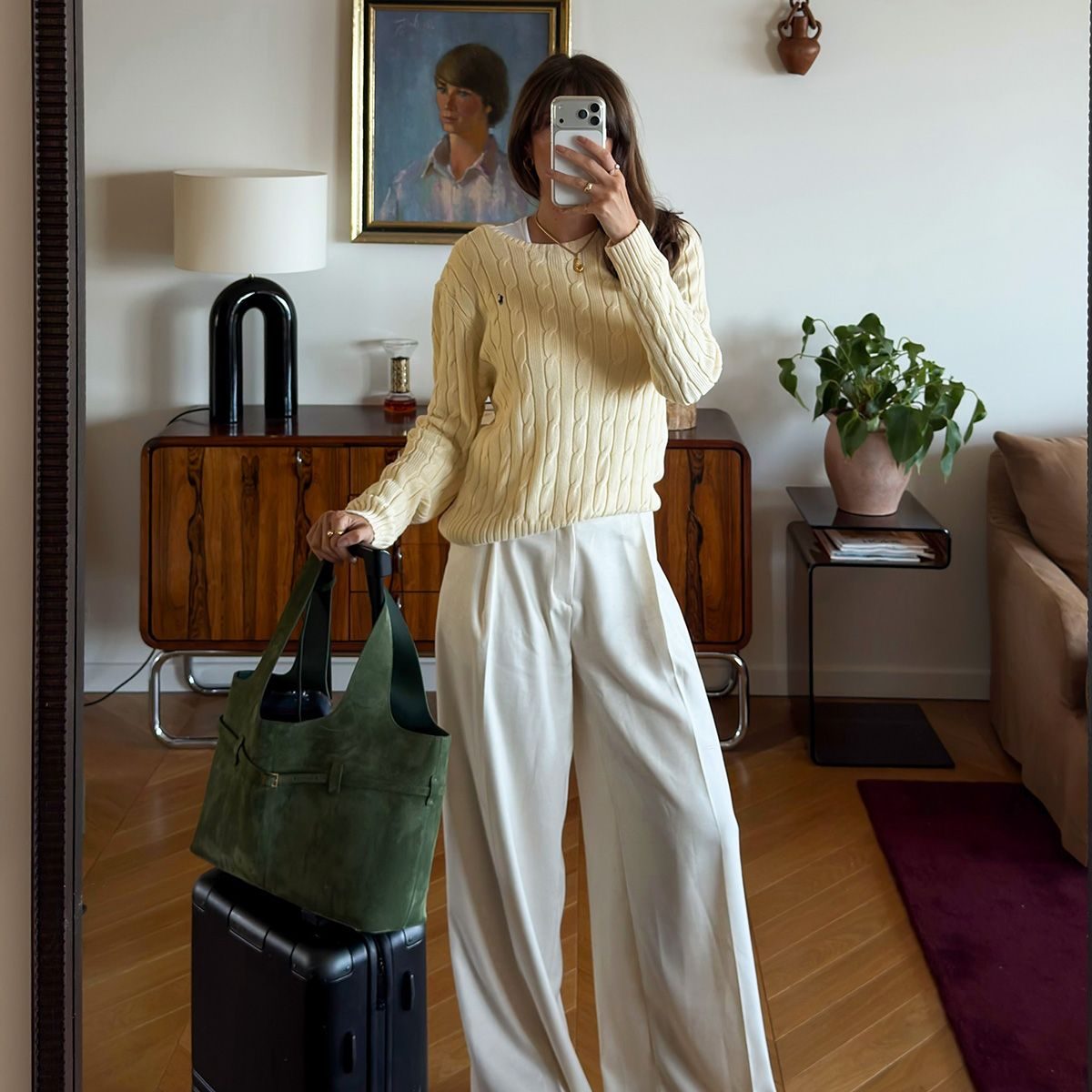
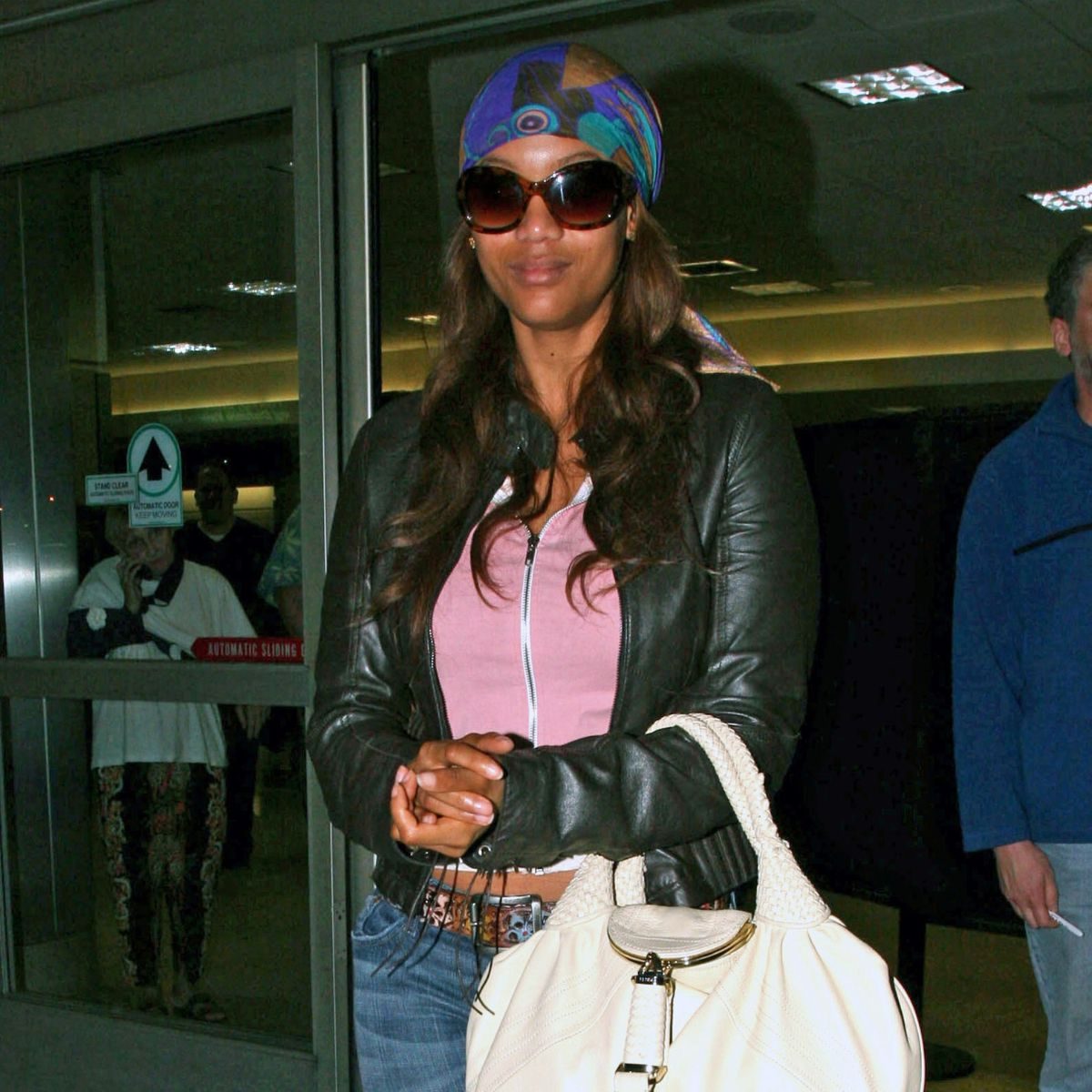
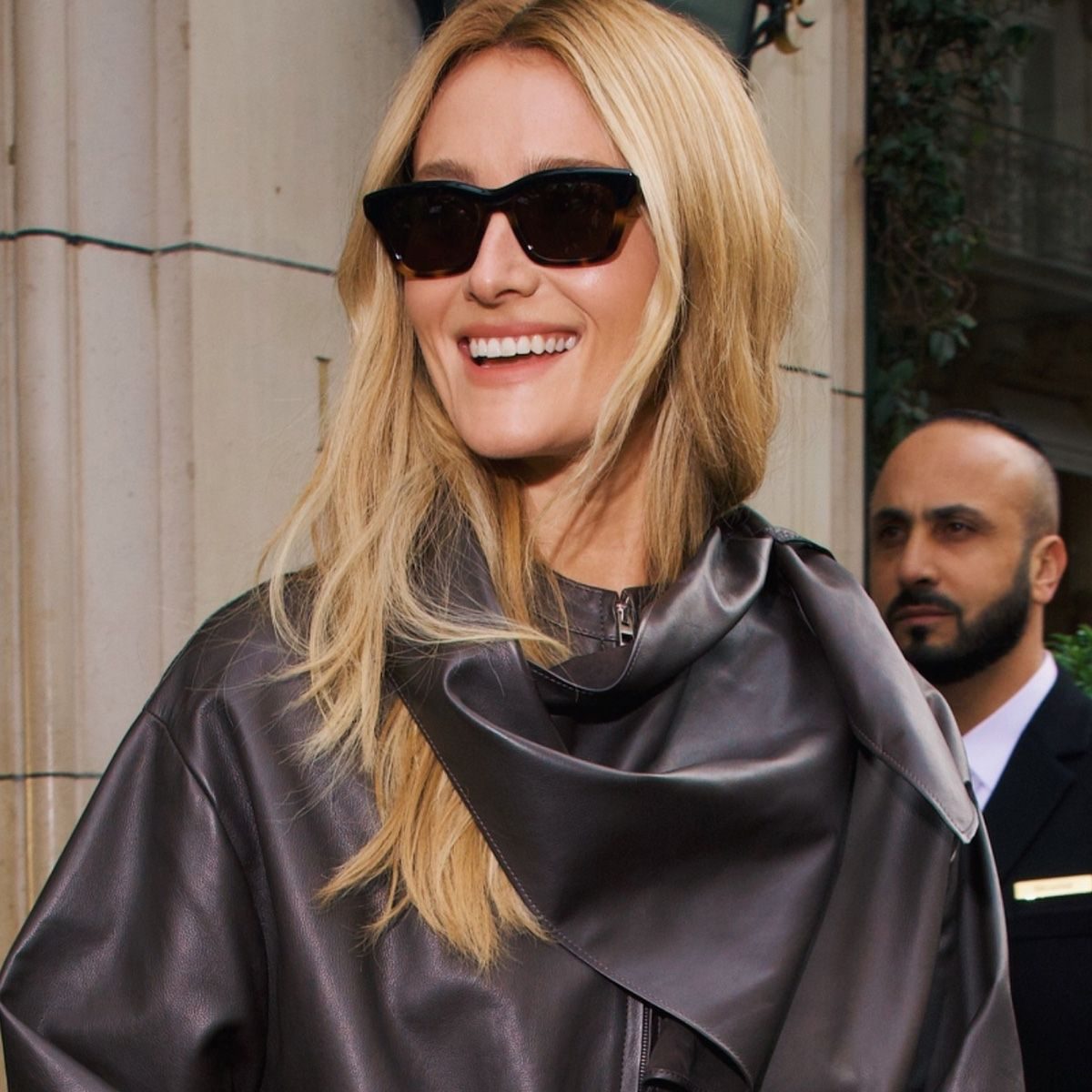
London solves autumn with one move: take a man's wool jacket, buy it secondhand for the price of a takeaway dinner for two, and wear it over something soft. Photographed on the pavement outside the markets, that single combination accounts for more good outfits than everything on the rails.
We shot outside two markets in Hackney and Bermondsey on the same Saturday in September, between nine and one. It was cold enough for wool at the start and warm enough to carry it by the end, with the intermittent drizzle that decides how British layering really works. Everything has to come off in under ten seconds and be light enough to carry once it is off. The people who looked best had planned for that, not for a photograph.
The jacket comes from menswear, the layers come from everywhere else
Every outfit worth photographing that morning was built on a jacket cut for a man and worn by somebody who was not going to alter it. The fit is the whole trick, and it is the opposite of what a tailor would tell you.
- Shoulder seam past the bone — A jacket that fits like a blazer reads as office wear. The London version lets the shoulder seam drop a little past the joint, which turns a formal garment into an outer layer.
- One soft layer underneath — A knitted dress, a fine merino crewneck or a slip dress. The jacket supplies all the structure, so everything under it should be doing the opposite job.
- Nothing tucked in — Every strong outfit we shot left the base layer loose. Tucking pulls the proportions back towards tailoring and loses the ease that makes the look work over a dress.
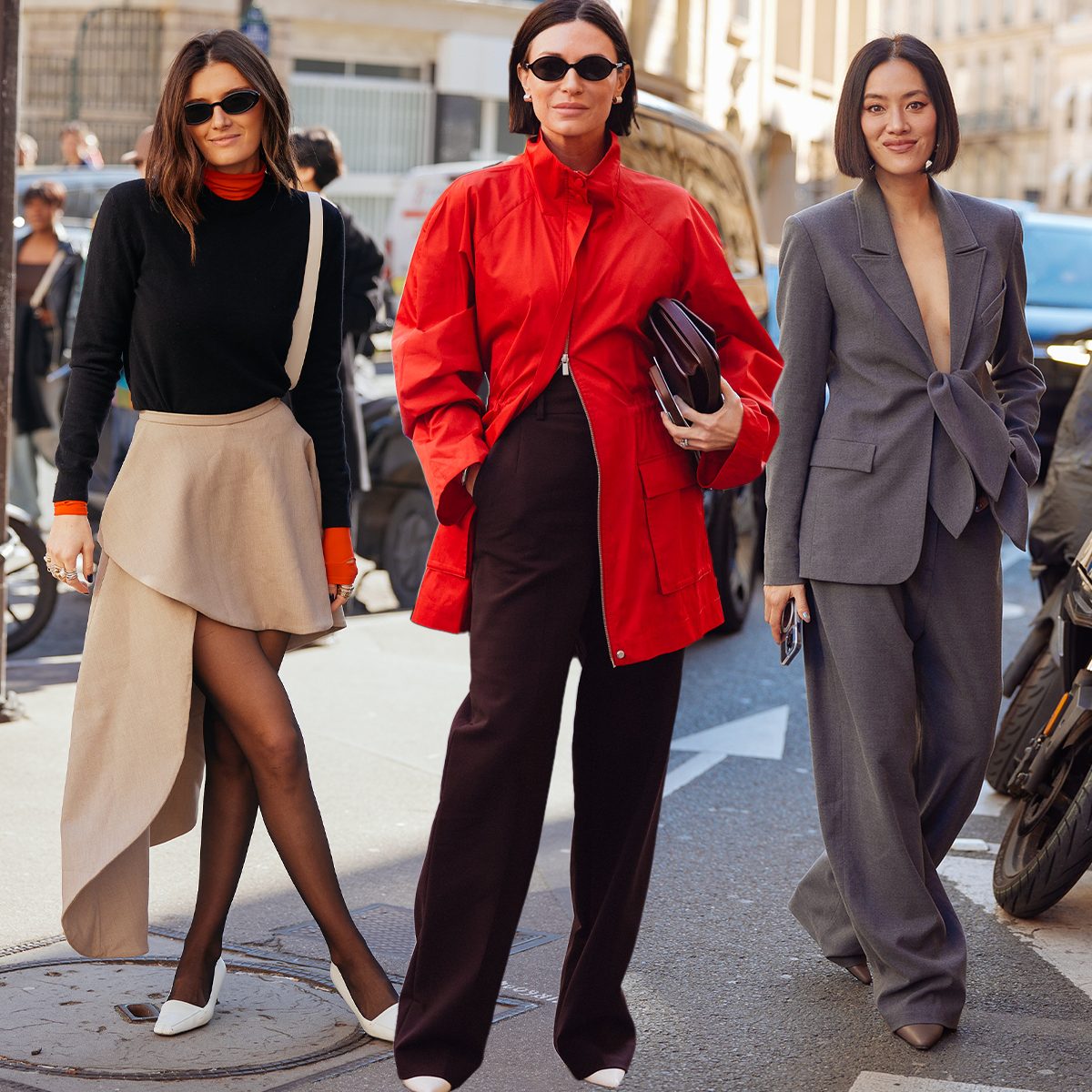
Why the layering holds at street level
The logic is closer to engineering than to fashion. Wool holds its shape and repels light rain, so it can be the outermost layer. A knit holds warmth against the body without adding bulk at the shoulder. Worn together, the two layers cover a temperature range of about ten degrees, which on a British September day is the difference between being comfortable and being wrong for six hours.
I buy the jacket a size too big and I shorten nothing. The length is what makes it look like mine rather than borrowed from somebody with better taste.
That refusal to alter is not laziness. Taking in the waist or shortening the sleeve would restore the jacket to what it was designed to be: a piece of menswear in the right size. Left alone, it becomes a coat. That is the whole transformation, and it costs nothing beyond the price of the jacket.
What secondhand tailoring costs in London
One outfit, priced layer by layer (estimates)
| Layer | Typical used (est.) | New equivalent (est.) | Cost per wear (example) |
|---|---|---|---|
| Wool blazer, oversized | $58 | $320 | $0.64 |
| Merino crewneck | $22 | $90 | $0.31 |
| Knitted midi dress | $35 | $120 | $0.49 |
| Silk square scarf | $18 | $75 | $0.40 |
| Leather loafers | $52 | $180 | $0.72 |
The totals make the case. By my estimates, a full outfit like this lands somewhere around $150 to $220 secondhand, less than many single layers cost new. The jacket is the one piece where quality shows from across the street, so it's the one worth paying up for.
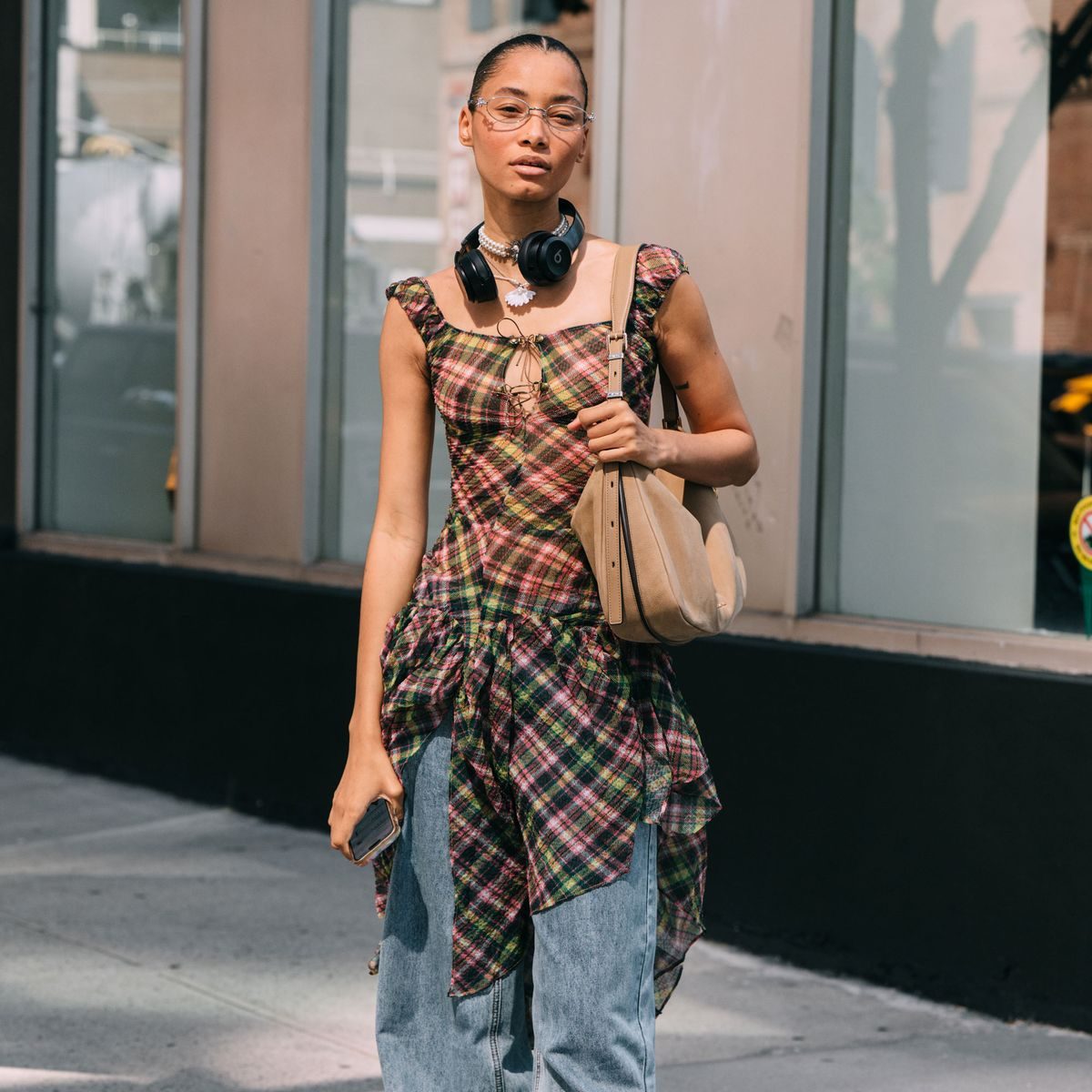
The tailoring worth hunting for
These are the categories Londoners were actually wearing, with the prices they trade at in the UK and the US, converted. Note how far below the new equivalent the jacket sits; that gap is the reason this look exists at all.
Shop the London layers
Every piece below is common enough to find this week. The jacket is the only one worth a saved search and two weeks of patience. Prices are shown only where we confirmed them on the brand or retailer page in Oct 2026.
Best layer1970s–90s British makers
Oversized wool blazer
Two-button, single-breasted and heavy enough to hold its shape when worn open.
Search listings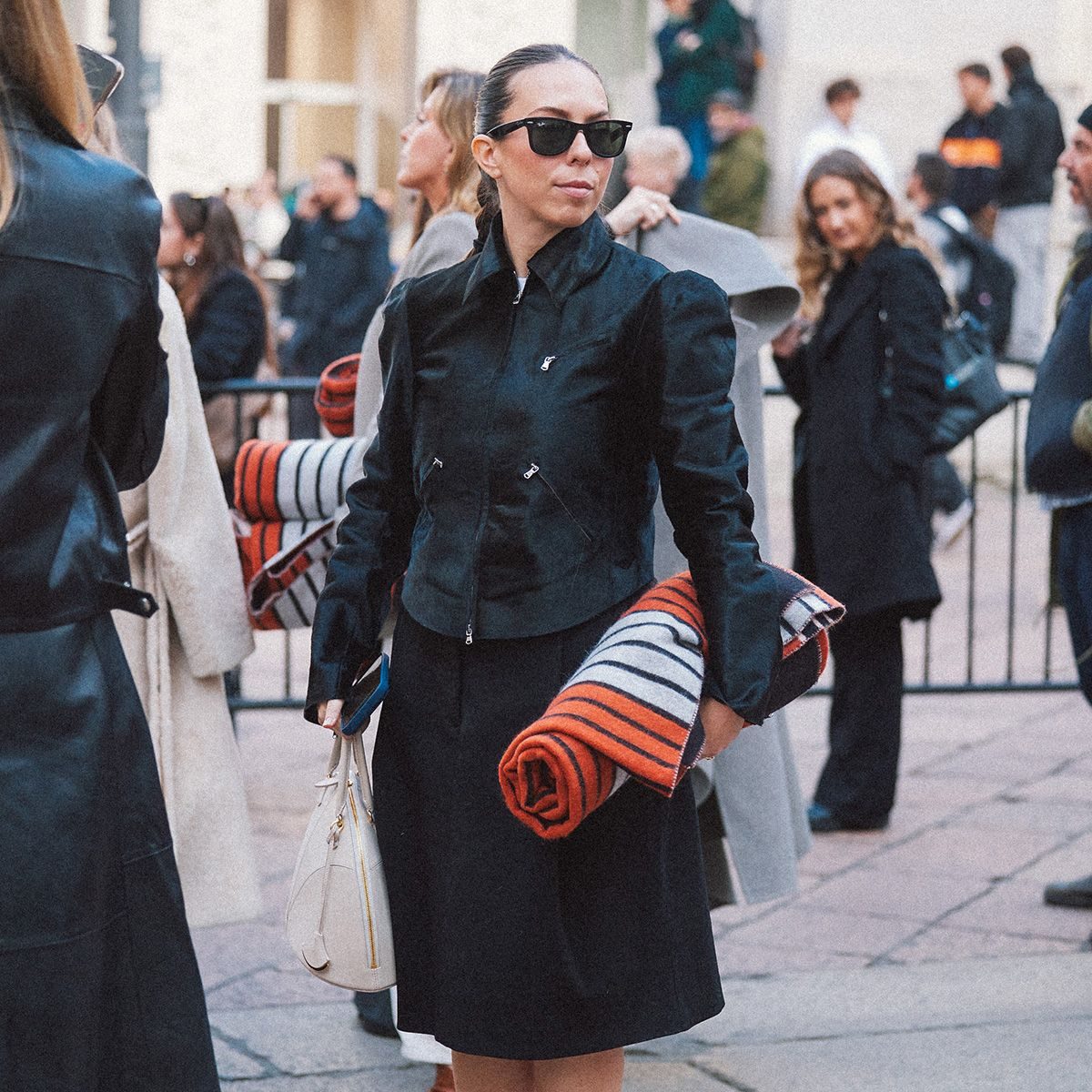
Harris tweed
Tweed overcoat
The warmest thing you can buy secondhand for the money, and the one piece in this list that will survive being rained on. Avoid anything with moth damage at the collar, which spreads.
Search listings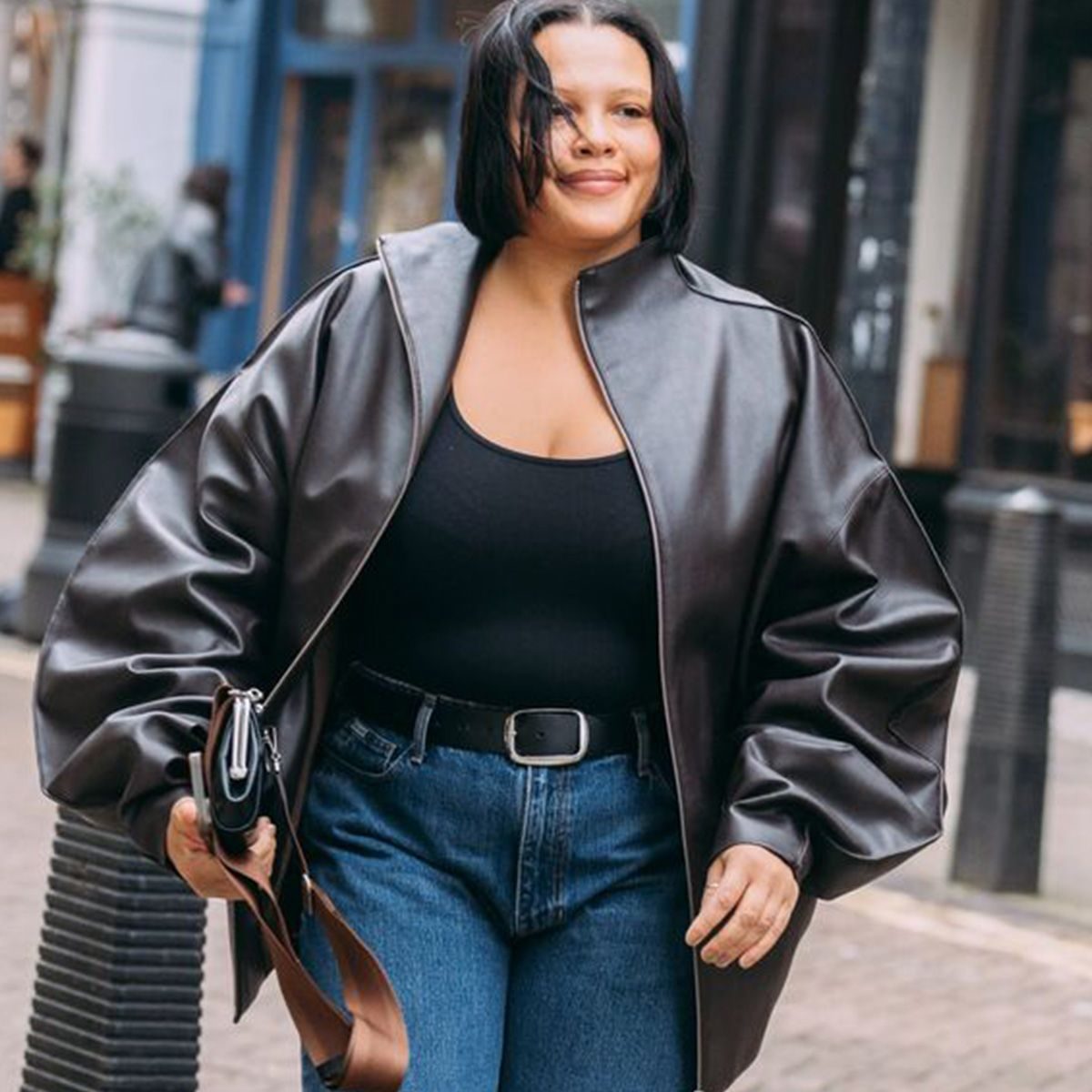
1990s high street
Fine merino crewneck
Thin enough to sit under wool without bulk at the shoulder. Hold it to the light: if you can see your hand clearly through the knit, it's too fine to layer and will pill quickly.
Search listings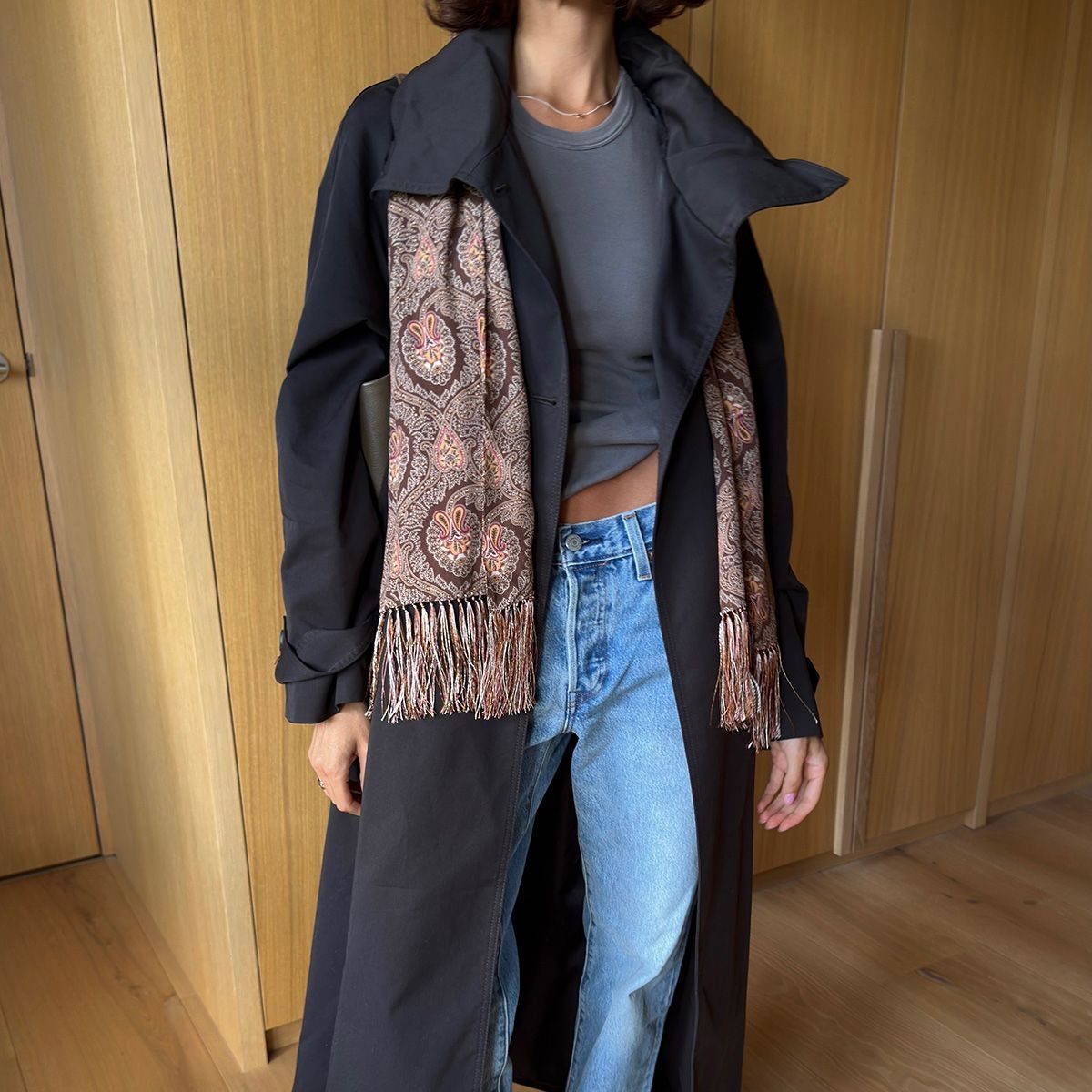
Any maker
Knitted midi dress
The soft layer the whole look is built on. Check the fiber label for a high wool content (US labels must list each fiber at 5 percent or more by percentage), and choose a straight cut; a defined waist fights the jacket.
Search listings
Vintage
Silk square scarf
Worn loose at the neck or tied to a bag handle, it is the cheapest way to add a color that appears nowhere else in the outfit. Check for watermarking along the hem before you pay.
Search listingsAlterations are where the outfit is decided
The only alteration worth paying for on a jacket like this is the sleeve, and even that is optional. Everything else should be left exactly as found.
- 1
Leave the width alone
A jacket that is too wide at the waist is the point. Taking it in turns a coat back into a blazer and removes the only thing that made it interesting.
- 2
Shorten the sleeve only if it covers your hand
Wool should break once at the wrist. If the cuff sits below the knuckle, shortening a little is worth a tailor's quote. Go much further and the cuff buttons look wrong.
- 3
Have the lining repaired, not replaced
A split underarm can often be repaired cheaply. Replacing a whole lining costs much more, and it's only worth it on a jacket you already love.
- 4
Press, do not clean
A wool jacket should be steamed and pressed far more often than it is dry-cleaned. Cleaning strips the natural oils that give wool its shape.
What to walk away from
Two things ruin this look. The first is a jacket that fits: a precisely cut blazer over a soft dress reads as office wear with a dress instead of a shirt. The second is a cheap wool blend, which will not hold a dropped shoulder and will hang limply by November. Check the fiber label. Below 70% wool, keep walking.