Two of this season's three knitwear stories are good secondhand buys: the chunky cable and the oversized cardigan, in wool or cashmere, often around $45–90 used (est.). The third, argyle, is a costume. Buy it cheap or skip it.
Every knitwear price in secondhand is set by two things: the fiber and the gauge. Pattern matters far less than sellers think. A plain gray cashmere crew outperforms a spectacular patterned acrylic cable on every measure that survives a single winter, and the resale market prices that correctly even when the trend reports do not.
The rule that governs every knitwear purchase
Natural fiber, dense gauge, sound shape. Wool, cashmere, alpaca and mohair all hold their price because they can be repaired, re-knitted and re-worn. Acrylic and its blends do not, because the fiber pills permanently and there is nothing a mender can do about it. Roughly nine out of ten knits on a charity shop rail are acrylic, and roughly nine out of ten of those should stay there.
Chunky cable knit: excellent fiber, difficult shape
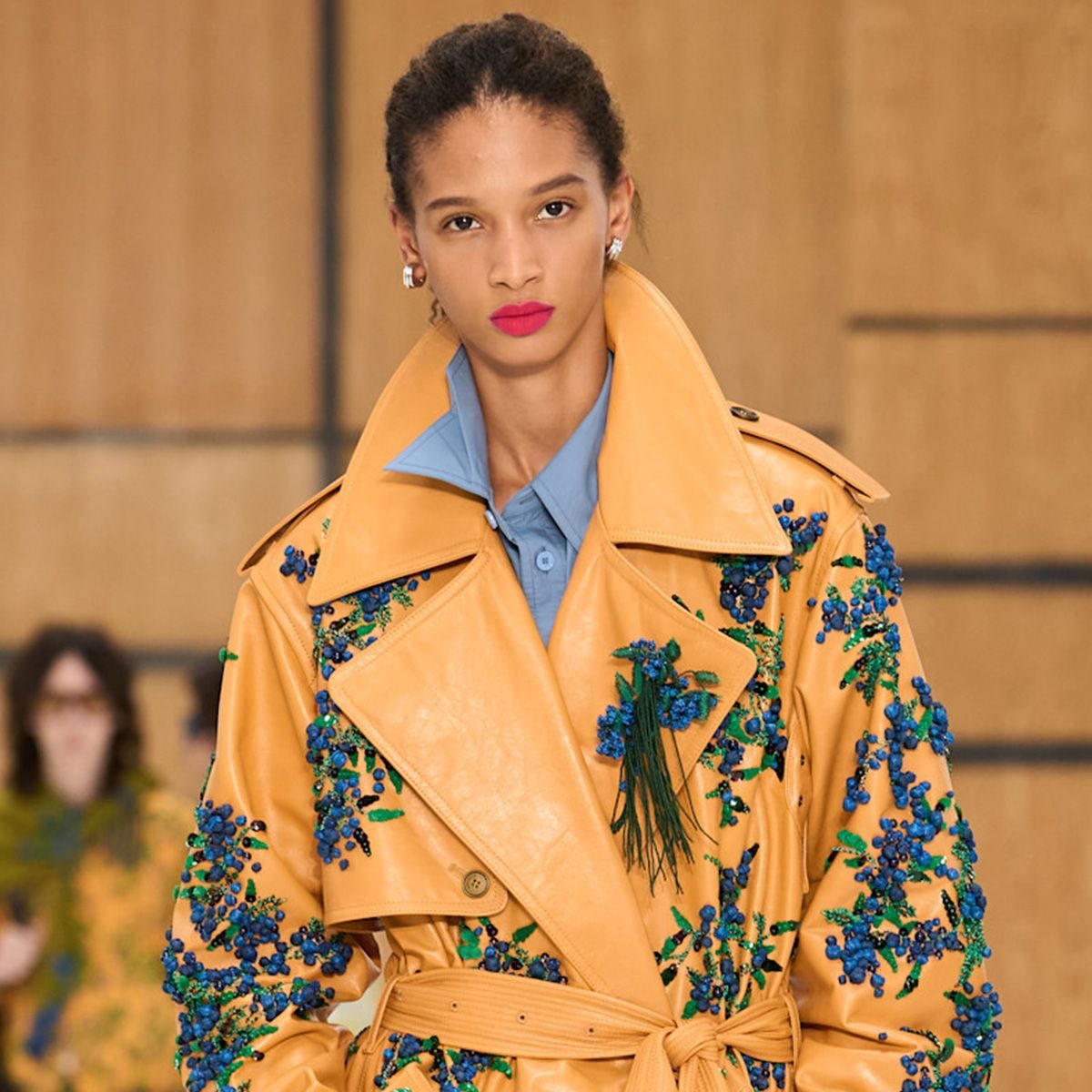
A hand-knit Aran cable in undyed wool is some of the best-value knitwear out there, often $50–90 used (est.). Traditional Aran sweaters were knit from unscoured wool that kept its natural lanolin, which made them water-resistant. The problem is shape. Old Aran sweaters were cut boxy and short.
That works if you treat it as outerwear rather than a base layer: over a shirt, under a coat, sleeves pushed up. It doesn't work if you want something fitted. Don't buy a cable knit to alter. Reknitting a shoulder is expensive, and a knit that's been taken in no longer moves with the body.
Oversized cardigans: the strongest trade of the three
The oversized cardigan is the strongest secondhand knitwear buy of the three, because it suits most bodies, it can be worn open or closed, and it has never been out of production long enough for supply to dry up. Lambswool and cashmere versions from the 1980s and 1990s are the best hunting ground, often $30–70 used (est.).
Look at three things: the button placket, the cuffs and the underarm. A cardigan is a garment that is opened and closed hundreds of times, so the placket is where it dies first. If the buttonholes have stretched into slots, or the buttons have been replaced with mismatched ones, the knit has had a hard life and should cost less than $35.
A cardigan is judged by its buttonholes. Everything else can be fixed.

Argyle: buy it cheap, or not at all
Argyle is a pattern, not a fiber; an argyle is simply diamonds or lozenges, usually overlaid with crossing diagonal lines, which means it can be printed onto anything and usually is. Used argyle sweaters tend to sell cheaply regardless of brand, and the ones that hold value are wool vests from the 1970s and 1980s with intact ribbing at the hem.
The upside is that this makes argyle the cheapest way to wear something decorative this autumn. A wool argyle vest at $25 is a real bargain and will outlast the trend by five years. A $160 new argyle cardigan from a designer label is the one to avoid: you will be selling it for $40 next spring.

What holds value and what does not
Knitwear benchmarks, fall 2026 (estimates)
| Knit | Fiber that holds value | New (est.) | Used (est.) | Pay up to (est.) |
|---|---|---|---|---|
| Chunky cable | Wool, aran, alpaca | $250–350 | $50–90 | $100 |
| Oversized cardigan | Lambswool, cashmere | $180–400 | $30–70 | $80 |
| Fine-gauge crew | Cashmere, merino | $250–400 | $40–85 | $90 |
| Mohair fluff | Mohair and silk | $150–300 | $35–70 | $70 |
| Argyle | Wool vest, 1970s | $90–200 | $15–45 | $40 |
| Acrylic cable | None | $40–80 | $8–18 | $15 |
The last row is the important one. Acrylic cable knits are among the most common garments in any thrift store and the least valuable. They're fine as a cheap impulse buy and a bad deal at $30, which is what many are priced at because they look substantial on the hanger.
Six knits worth buying now
The knitwear edit
Check every one of these in daylight at the shoulder, the underarm and the hem before you pay. Prices are shown only where we confirmed them on the brand or retailer page in Oct 2026.
Best fiberVintage Aran, Irish-made
Hand-knit cable sweater
Undyed wool in a dense cable that will last decades. Hold it up to a window: if you can see daylight through the stitch, it is machine-knit and worth half the price.
Search listingsBest resale holdPringle of Scotland
Lambswool oversized cardigan
Scottish lambswool from this mill keeps its shape after washing, which is rare.
Search listings
Barrie or similar
Plain cashmere crew neck
The safest knit purchase in secondhand. Plain cashmere resells in under two weeks in any color, so the downside is limited even if the fit is not perfect.
Search listings Cheapest trend buy
Unbranded, 1970s–80s
Wool argyle vest
The only argyle worth owning. The hem elastic is what decides whether it lies flat; if it has gone slack the vest will ride up all day and you will never wear it.
Search listings
Any maker
Mohair fluff cardigan
Mohair holds value moderately well because the fiber is expensive to produce. It also sheds. If the seller has photographed it on a dark surface and there is visible fluff, that is honest photography and a reason to pay less.
Search listingsWhen to buy newFour checks before you pay
- 1
Read the fiber label, in full
A knit described as wool that lists 60% acrylic is an acrylic knit with a wool story. US labels must list each fiber at 5 percent or more by percentage, so read it, and if natural fiber is the minority, pay a fast-fashion price.
- 2
Stretch the ribbing and let go
Cuffs, hem and neckband should snap back. Ribbing that stays stretched means the elastic fiber has failed, and the garment will hang loosely at the wrists from the first wear.
- 3
Turn it inside out at the underarm
The underarm is where deodorant, friction and moth all converge. Pilling there is normal; a hole or a brown stain is not, and neither can be fixed invisibly.